
Rodent control failures in warehouses rarely stem from a lack of effort. More often, they occur when prevention actions are implemented individually rather than as part of a coordinated plan. In these situations, facilities may address isolated symptoms, such as placing traps, sealing visible gaps, or increasing cleaning, while mice continue to exploit overlooked access points and pressure areas.
This guide outlines ten proven operational strategies that work together to reduce mouse activity at scale. Each strategy targets a specific control lever, from exclusion and sanitation to monitoring and deterrence, helping warehouses build layered protection that remains effective through daily operations, seasonal surges, and audit scrutiny.
Strategic Overview
Keeping mice and other rodents out of a warehouse is often more challenging than expected. As facilities grow larger and operations become more complex, constant dock traffic and food adjacent goods create steady pressure that isolated control measures struggle to address on their own. As a result, even well-maintained sites can experience recurring rodent activity.
To manage this risk effectively, warehouse mouse prevention must move beyond single tactics. Successful programs combine physical exclusion and sanitation with continuous deterrence and monitoring that function alongside daily operations rather than interrupting them. This layered approach is especially important in hygiene-sensitive environments, including food and beverage, pharmaceutical, and cold-chain logistics, where consistency and documentation matter as much as immediate results.
In response to these demands, many facilities are adopting integrated pest management strategies that reduce reliance on pesticides while maintaining continuous coverage. Strike System reflects this shift through industrial, chemical-free deterrence technology. The sections that follow outline ten proven strategies that work together to support long-term, compliant mouse prevention in warehouse environments.
1. Strike System Seismic Vibration Technology
The best commercial-grade mouse prevention is likely seismic vibration technology. It works by emitting focused, adaptive frequency vibrations through a building’s foundation and structural elements. These vibrations are designed to disrupt rodent movement and nesting behavior without using chemicals or producing audible noise. Because the signal travels through the structure itself, the technology provides continuous, infrastructure-level coverage in large warehouses, data centers, and food production environments
This structural approach addresses a key limitation of traditional control methods. Rather than targeting rodents only at known activity points, seismic vibration establishes a persistent deterrent across the entire facility footprint. As a result, Strike System’s platform is a leading commercial solution, as it is chemical-free, low-maintenance, and highly scalable across single-site and multi-site operations. Its compatibility with HACCP-aligned environments, CE-marked hardware, and ISO-certified manufacturing processes supports deployment in hygiene-critical environments.
Compared with ultrasonic devices or frequent chemical rotations, seismic vibration is often the best mouse prevention for warehouses because it provides more consistent, infrastructure-level deterrence while reducing reliance on toxicants and the need for repeated device replacement. For enterprises seeking commercial-grade mouse prevention that strengthens, rather than replaces, other integrated pest management measures, it serves as a foundational layer that enhances the effectiveness of every additional control strategy.
2. Regular Warehouse Inspections
Proactive inspections are the earliest warning signal in a robust IPM program and play a central role in effective mouse prevention for warehouses. When inspections are consistent and documented, they allow facilities to identify early signs of activity before small issues escalate into larger infestations.
A systematic warehouse mouse inspection program prioritizes docks, storage aisles, break rooms, waste areas, and MHE charging stations, focusing on activity, access routes, and conducive conditions. Using a recurring schedule and a written checklist helps maintain consistency across shifts, while digital logs keep trends visible and accountability clear.
Common signs of rodent activity include:
- Droppings, urine staining, or strong ammonia-like odors
- Gnaw marks on pallets, cables, packaging, or door seals
- Grease rub marks along walls and baseboards
- Shredded nesting material in quiet corners or under racks
- Scratching sounds, especially at night
By surfacing droppings, nests, or damage early, regular inspections improve response speed and help limit spread and repair costs. This structured approach supports early pest detection and risk mitigation through visual assessment and environmental monitoring, strengthening the overall IPM program.
3. Sealing Entry Points Effectively
Exclusion is your first physical barrier. That’s why it’s best to inspect exterior walls, dock doors, utility penetrations, rooflines, and the interior perimeter, especially behind racking and near floor drains. Focus on:
- Cracks in masonry or slab joints
- Utility and conduit penetrations
- Door gaps, warped seals, and levelers
- Worn thresholds, vents, and drain lines
It’s best to seal gaps, cracks, and openings with steel wool or caulk to block rodent entry points, then reinforce with long-lasting materials where needed. However, remember: “Mice can squeeze through holes as small as a dime; so sealing small gaps is crucial for exclusion.”
The following comparison helps you choose the right commercial warehouse exclusion techniques:
| Gap/Scenario | Recommended Material | Where It Excels | Pros | Notes |
| Small cracks, hairline gaps | Silicone or polyurethane caulk | Masonry joints, trim lines | Flexible, weather-resistant | Pair with backer rod for wider joints |
| Irregular utility penetrations | Steel wool + sealant | Around pipes and conduits | Rodent-resistant, conforms to shape | Cover with a metal plate for durability |
| Larger openings, vents | 1/4″ galvanized metal mesh | Louvers, soffits, intake vents | Tough, chew-resistant | Secure with screws and washers |
| Door-to-floor light at thresholds | Heavy-duty door sweeps | Dock and man doors | Immediate seal, reduces pest ingress | Choose a brush or a rubber per floor type |
4. Maintaining Warehouse Cleanliness
Sanitation removes the food, water, and shelter that sustain mouse populations and is a foundational element of warehouse mouse prevention. To be effective, sanitation must be routine, assigned with clear ownership, and supported by auditable checklists that are consistent across shifts. Practical guidelines emphasize maintaining high cleanliness standards by regularly disposing of waste and promptly cleaning up spills to reduce rodent attraction. Avoid porous storage materials that double as nesting sites, as industry guidance consistently notes that cardboard can attract both mice and cockroaches.
These principles translate into daily operational practices that restrict access to food and water throughout the facility. Practical actions include:
- Remove food debris immediately and clean under conveyors and racking
- Keep break rooms free of unwashed dishes and open food
- Use sealed, lidded bins, and bag and stage waste away from doors
- Eliminate clutter and keep recycling compacted and contained
- Fix leaks and dry wet zones to remove water sources
When sanitation practices are consistent and documented, they reduce baseline conditions that allow rodent activity to persist, thereby supporting the effectiveness of other control measures in the program.
5. Organized and Elevated Storage Practices
Cluttered aisles and low-stored goods create hideouts and nesting zones. Organize inventory to keep sightlines open and inspection-friendly, making it harder for mice to move undetected. Rotate stock routinely to disturb potential nests and prevent long-term harborage.
Keep goods at least 18 inches off the floor and several inches from walls. Elevation on pallets and proper spacing make inspections faster, trap placement more precise, and sanitation more effective, all of which lowers risk at scale.
6. Strategic Use of Traps and Baits
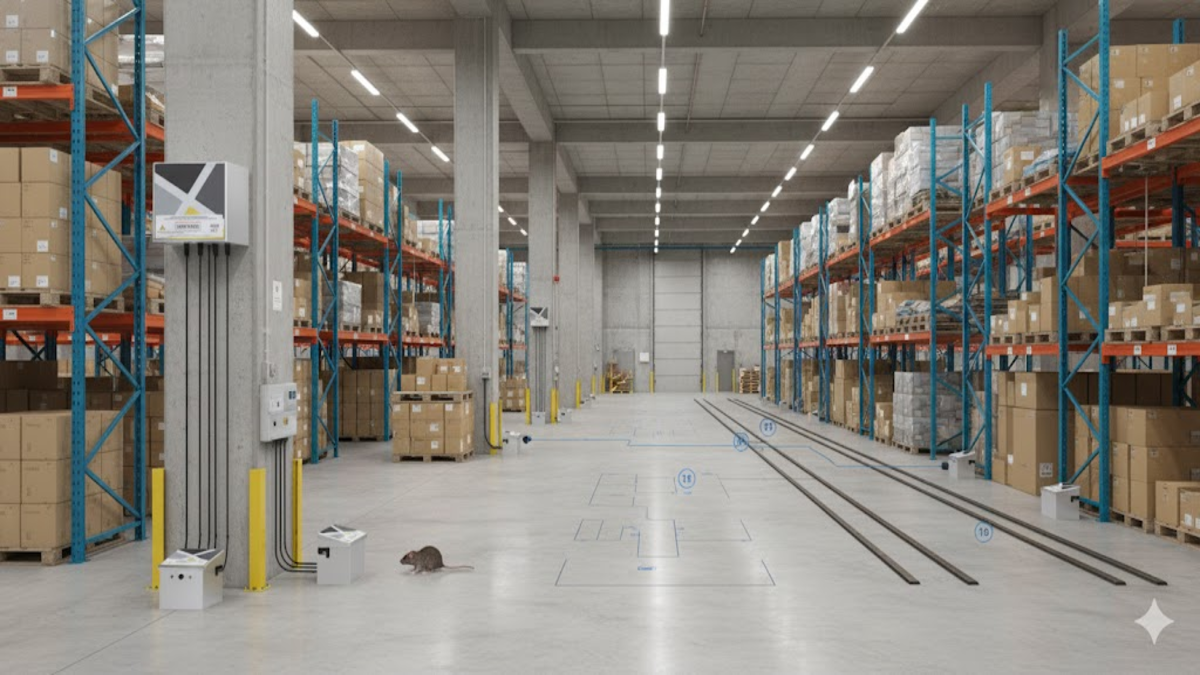
Traps and bait stations are targeted tools within a broader plan, not a stand-alone solution. Deploy a mix suited to your risk profile:
- Snap and electric traps provide quick kills and easy verification.
- Catch-and-release traps have a niche use where lethal control is restricted.
- Tamper-resistant bait stations protect rodenticides from non-target exposure.
For consistent results:
- Identify high-activity zones via monitoring and inspection.
- Place traps along walls and known runways, perpendicular to the travel direction.
- Check, document, and rotate placements regularly.
- Use tamper-resistant bait stations where label and policy allow.
7. External Landscaping and Perimeter Control
A tidy exterior discourages rodents from approaching the facility in the first place. Trim vegetation, remove dense shrubs near walls, and avoid fruiting plants around the perimeter. Keep grass short, clear debris piles, and inspect regularly for burrows along foundations, fence lines, and loading areas. A defined perimeter walk schedule (weekly or biweekly) helps you act before outside pressure becomes inside activity.
8. Pest Exclusion Devices and Barriers
Beyond caulk and mesh, mechanical barriers harden your envelope. Pest exclusion uses mechanical barriers, such as door sweeps, heavy-duty screens, and netting, to prevent rodents from entering a building. Perimeter devices like netting and spikes can protect vulnerable structural features. Prioritize:
- High-quality door sweeps and side seals on dock doors.
- Tight screens on intake vents and roof penetrations.
- Brush seals at levelers and bumper gaps in loading bays.
9. Employee Education and Engagement
Your team is often the earliest sensor network within a warehouse. Training employees on sanitation and basic pest awareness helps reduce risk by increasing the number of informed eyes on the floor during normal operations. To be effective, this engagement should remain practical, consistent, and easy to reinforce over time.
Key engagement actions include:
- Posting concise reporting guides at docks and break rooms.
- Making it easy to report sightings using QR codes or app-based forms.
- Running short, periodic refreshers tied to seasonal risk.
Clear communication of rodent prevention protocols supports consistent behavior and improves outcomes across shifts and third-party labor.
10. Professional Pest Control Partnerships
Bring in professional pest control support when rodent activity persists, audit requirements increase, or facilities operate in specialized environments such as cold storage, pharmaceuticals, or high-care food production. In these situations, professional providers can develop customized plans that combine trapping, baiting, and exclusion with documented monitoring and trend analysis.
Regular inspections performed by experienced technicians help identify issues earlier and shorten response times, closing gaps that in-house efforts often miss. Over time, this reduces the total cost of risk while providing greater confidence for facilities operating under strict compliance and audit expectations.
Continuous Monitoring and Adaptive Management
Warehouses are dynamic environments where layouts change, volume surges occur, and seasonal shifts place new pressure on operations. As a result, rodent control cannot remain static. Maintaining monitoring stations such as traps, cameras, or non-toxic indicators, along with digital logs, allows facilities to track activity trends and respond based on evidence rather than assumptions.
To stay ahead of emerging risks, facilities should reassess priority areas quarterly and adjust controls to account for seasonality, construction activity, and new suppliers. This adaptive approach to rodent control is critical, as rodents reproduce quickly, and a delayed response can allow minor incursions to escalate. When continuous deterrence is combined with monitoring and timely intervention, facilities can achieve more resilient, long-term control through solutions such as the Strike System.
For facilities looking to strengthen long-term prevention without increasing chemical use or service complexity, Strike System offers a complementary layer of protection within integrated pest management programs. Its continuous, infrastructure-level deterrence helps reduce baseline rodent pressure across large warehouse footprints, supporting monitoring efforts and allowing teams to focus response where it is most needed. For operations facing audit requirements, sustainability targets, or recurring rodent pressure, Strike System can serve as a stabilizing foundation that enhances the effectiveness of every other control measure.
Frequently Asked Questions
What are the most effective ways to prevent mice in a warehouse?
The ideal methods include sealing entry points, conducting regular inspections, maintaining strict sanitation, using strategic trapping or baiting, reducing clutter, and monitoring facilities as part of an integrated pest management plan.
How can entry points be sealed to block mice?
Inspect the building for small cracks, gaps, or holes, and seal them with materials such as steel wool, caulk, metal mesh, and door sweeps to prevent mice from entering.
What role does sanitation play in rodent prevention?
Sanitation eliminates food, water, and shelter sources that attract mice, making your warehouse less appealing and significantly reducing the risk of infestation.
Are ultrasonic or vibration devices reliable for mouse control?
Advanced devices that use adaptive frequencies, such as Strike System’s seismic vibration technology, may provide reliable, chemical-free pest prevention for commercial facilities when integrated with comprehensive pest control strategies.
When should professional pest control be involved for warehouses?
Engage professional pest control when you notice persistent rodent activity, compliance requirements mandate it, or for expert facility assessments and long-term prevention planning.