
Rats don’t just nibble; they interrupt operations, trigger compliance issues, and erode customer trust. The fastest way to stop a business rat infestation before it costs thousands is to combine strict sanitation, airtight exclusion, and continuous monitoring with professional commercial rat removal services for businesses when activity persists.
This guide lays out a practical, inspection-first playbook your team can use today, and shows where advanced technology, like Strike System’s micro-seismic deterrence, fits for critical facilities needing commercial rats solutions that are chemical-free, maintenance-free, and uninterrupted operations.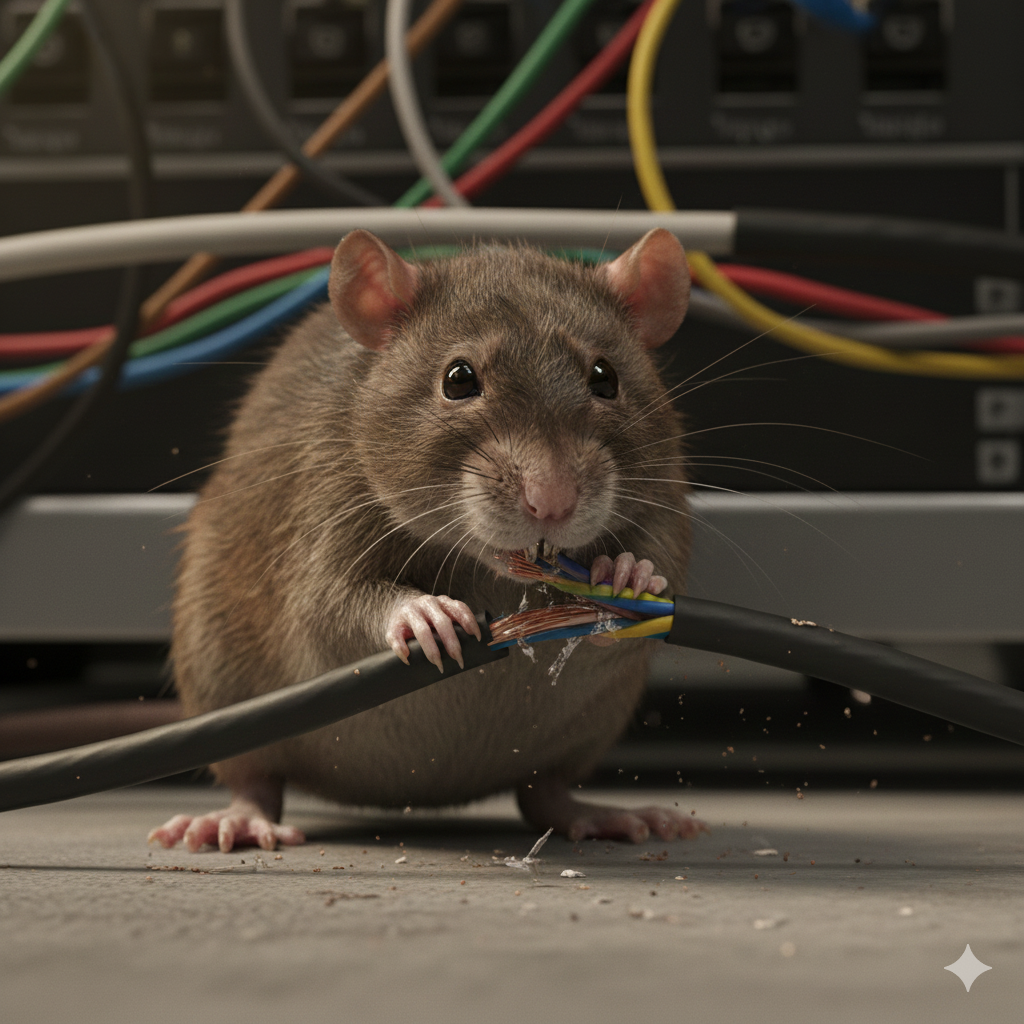
Understand the Risks and Costs of Rat Infestations in Businesses
Rat infestation risks for commercial facilities span far beyond nuisance. Rodents contaminate food and materials, chew through wiring and insulation, and disrupt logistics, resulting in lost inventory, equipment downtime, and delayed deliveries.
Industry analyses indicate that rodents damage food and inventory, causing costly supply chain delays and business losses, and compounding direct costs and reputational harm when customers are affected.
Regulatory violations are another serious exposure: health codes and third-party audits can trigger fines or closures if pest evidence is found, especially in food, healthcare, and pharmaceuticals.
Direct and indirect costs can include:
- Product write-offs, recalls, and rework
- Equipment repairs from gnawing-related shorts
- Over time, the labor to sanitize and restock
- Contract penalties for missed SLAs
- Audit failures, shutdowns, and PR fallout
Table: Common Business Impacts by Sector
| NAICS sector | Example setting | Type of loss | Consequence |
| 311 Food manufacturing | Ready-to-eat facility | Contamination, audit failure | Batch disposal, production halt |
| 445 Food retail | Supermarket backroom | Damaged stock, droppings | Shrink, health code citations |
| 722 Food service | Restaurant kitchen | Sanitation breach | Closure, brand damage |
| 493 Warehousing | Distribution center | Package gnawing, nesting | Returns, SLA penalties |
| 541/621 Labs & healthcare | Clinic, lab | Biosecurity risk | Compliance breach, shutdown |
| 325 Pharma | Packaging cleanroom | Regulatory nonconformity | Recall, interrupted trials |
Proactive prevention is consistently cheaper than remediation, making early detection the best investment.
Conduct Routine Inspections to Detect Early Signs
A routine inspection is a scheduled walkthrough to identify signs of rodent activity, such as droppings or nests, before pests multiply.
Regular inspections detect rodent signs like droppings, gnaw marks, nests, and odors to prevent infestations early, particularly in storage rooms, docks, kitchens, utility chases, and drop ceilings.
Step-by-step inspection plan:
- Map high-risk zones, including receiving, dry storage, cold rooms, break areas, trash compaction, mechanical rooms, and roof lines.
- Inspect weekly with a flashlight and mirror; document findings with photos.
- Look for physical signs like droppings, nests made of shredded paper or cloth, greasy rub marks along walls, gnaw marks on wood or wiring, and soil burrows near foundations.
- Check conducive conditions, such as standing water, unsealed food, gaps at doors or pipes, and cluttered pallets.
- Flag hot spots and initiate corrective actions within 24 to 48 hours.
Maintain Strict Cleanliness and Sanitation Practices
Sanitation removes attractants that attract rats. Store food in airtight containers, dispose of garbage regularly in sealed bins, and clean spills and crumbs immediately to discourage rodents from settling in.
Restaurants must store ingredients in sealed containers and clean kitchen surfaces daily, but the same rigor applies to any facility handling consumables or packaging.
Sample Sanitation Checklist
| Task | Frequency | Notes |
| Sweep and sanitize food-prep and break areas | Daily (each shift for food service) | Include under/behind the equipment |
| Empty and seal trash/recycling | Daily or when 2/3 full | Use liners and tight-fitting lids |
| Detail clean under racks and pallets | Weekly | Rotate inventory; follow FIFO |
| Power wash loading dock/trash corral | Weekly | Keep drains clear, no pooling water |
| Deep clean storage/kitchen vents and hoods | Monthly | Remove grease film attractants |
Consistency matters: assign owners, time-stamp completion, and audit compliance.
Seal Entry Points to Prevent Rodent Access
Exclusion is your strongest defense. Rodents squeeze through holes as small as a dime (mice) and a quarter (rats).
Seal openings with metal mesh or sheet metal to eliminate entry points (Orkin guidance). Sealing entry points means blocking all gaps and holes larger than 1/4 inch in the building exterior or interior to stop rodents from entering.
What to Inspect and Seal:
- Walls and foundations: Fill cracks with steel wool and high-quality sealant; cover with metal flashing.
- Utility penetrations: Seal around pipes, conduits, and cable trays with gnaw-resistant materials.
- Doors and docks: Install door sweeps and brush seals; repair gaps at levelers and seals.
- Vents and louvers: Fit with 1/4-inch hardware cloth or metal mesh; maintain airflow.
- Floors and drains: Repair broken thresholds; cap unused drains.
Local public health guidance reinforces using steel wool, caulk, and durable, gnaw-resistant materials for long-lasting exclusion.
Implement Effective Waste and Storage Management
Poorly managed waste is a standing invitation to rodents. Dispose of garbage regularly in sealed bins, keep storage areas organized and clutter-free, and elevate stored goods off the ground using pest-resistant shelving to deter rodents.
For food businesses, inspect deliveries for signs of contamination before staging, and locate dumpsters and compactors as far from entrances as feasible, ideally on a hardstand with daily lid checks.
Best Practices:
- Use tamper-resistant, tight-lid containers and keep lids closed between collections.
- Schedule pickups to prevent overflow; clean the corral weekly.
- Maintain 18-inch inspection aisles and 6-inch pallet clearance from walls.
- Separate recyclables that may harbor residues; rinse and bag as required.
Utilize Professional Pest Control Solutions with Advanced Technology
When pressure is high or compliance is strict, escalate to the best professional rat removal for businesses. Integrated Pest Management (IPM) is an environmentally responsible approach that combines sanitation, exclusion, trapping, and monitoring for optimal control.
Commercial pest management includes baiting, trapping, chemical treatments, and IPM. Your provider should tailor the mix to your risk profile and regulatory context.
Where next-gen deterrence fits: Strike System’s patented or patent-pending micro-seismic vibration systems pair with calibrated ultrasonic devices to create a maintenance-free, chemical-free deterrent field ideal for sensitive environments, food, healthcare, labs, and data centers, where uptime and audit readiness matter.
See how the technology supports operational continuity in our overview of Strike System’s commercial rat removal technology.
Comparison: Conventional vs. Seismic Deterrence
| Attribute | Conventional chemicals or basic ultrasonics | Strike System micro-seismic + ultrasonic |
| Outcomes | Reactive; relies on consumption/compliance with baits; variable ultrasonic efficacy | Proactive, continuous deterrence that reduces pressure without poisons |
| Compliance fit | Extra controls for food/healthcare; risk of secondary exposure | Chemical-free; supports certifications and audit trails |
| Sustainability | Ongoing consumables, disposal needs | Low-waste, energy-efficient devices |
| Maintenance | Re-baiting, trap servicing, product rotation | Largely maintenance-free with scheduled device health checks |
| Downtime risk | Service windows required for treatments | Minimal disruption; devices operate during production |
For a more in-depth implementation guide for food settings, review our commercial rat removal for food facilities resource from Strike System.
Monitor and Document Rodent Activity Continuously
Monitoring transforms guesswork into action. Electronic rodent monitoring (ERM) systems detect rodent activity in real time, enabling early detection, faster intervention, and clearer audit evidence.
Track these essentials:
- Sightings and sensor alerts with timestamps
- Locations of hot spots and trend lines
- Corrective actions taken and outcomes
- Device health and inspection intervals
“Monitoring rodent activity means using routine checks or electronic devices to track pest movement and inform rapid response, reducing the chance of infestation.”
Train Staff on Rodent Prevention and Reporting
Your people are the most distributed sensors you have. Train staff to recognize and report rodent activity and practice proper food storage and cleanliness, especially in kitchens and storage areas.
Cover what to spot (droppings, nests, rub marks), where to check (receiving, break areas, under equipment), and how to use your reporting tools.
Build a Pest‑Aware Culture:
- Include a 5-minute pest check in shift handovers
- Post quick-reference visuals in back-of-house areas
- Reward timely, accurate reporting that leads to fixes
Frequently Asked Questions
How do I properly seal entry points to keep rats out of my business?
Inspect exterior walls, doors, windows, vents, and utility lines for gaps 1/4 inch or larger, then seal with steel wool, metal mesh, or high-durability caulk and flashing.
What sanitation habits are most effective in deterring rats?
Store goods in sealed containers, clean spills and crumbs promptly, and empty tightly sealed bins on a set schedule before they overflow.
When should I call professional pest control instead of using DIY methods?
Call professionals if you see persistent activity, repeated damage, or if your facility must meet strict audit or regulatory standards.
How often should I conduct inspections for rodent signs?
Inspect high-risk areas weekly, increasing frequency during seasonal shifts, construction nearby, or after any confirmed activity.
What are the safest and most effective early deterrents for business rat control?
Start with exclusion and sanitation, then add technology like Strike System’s micro-seismic and ultrasonic deterrents or electronic monitoring for early detection and response.