
Energy and industrial facilities are entering a new era of rodent control. Rising reliability requirements, environmental expectations, and digitalization strategies are all converging on one point: traditional poisons and traps alone are no longer enough for 2026-ready plants.
Ultrasonic and seismic rodent systems, like those provided by Strike System, are emerging as a core element of resilient, chemical free protection for power generation, transmission, and high value industrial utilities. This article explains why, how they work, how they compare to legacy solutions, and how to design a practical deployment plan for your sites.
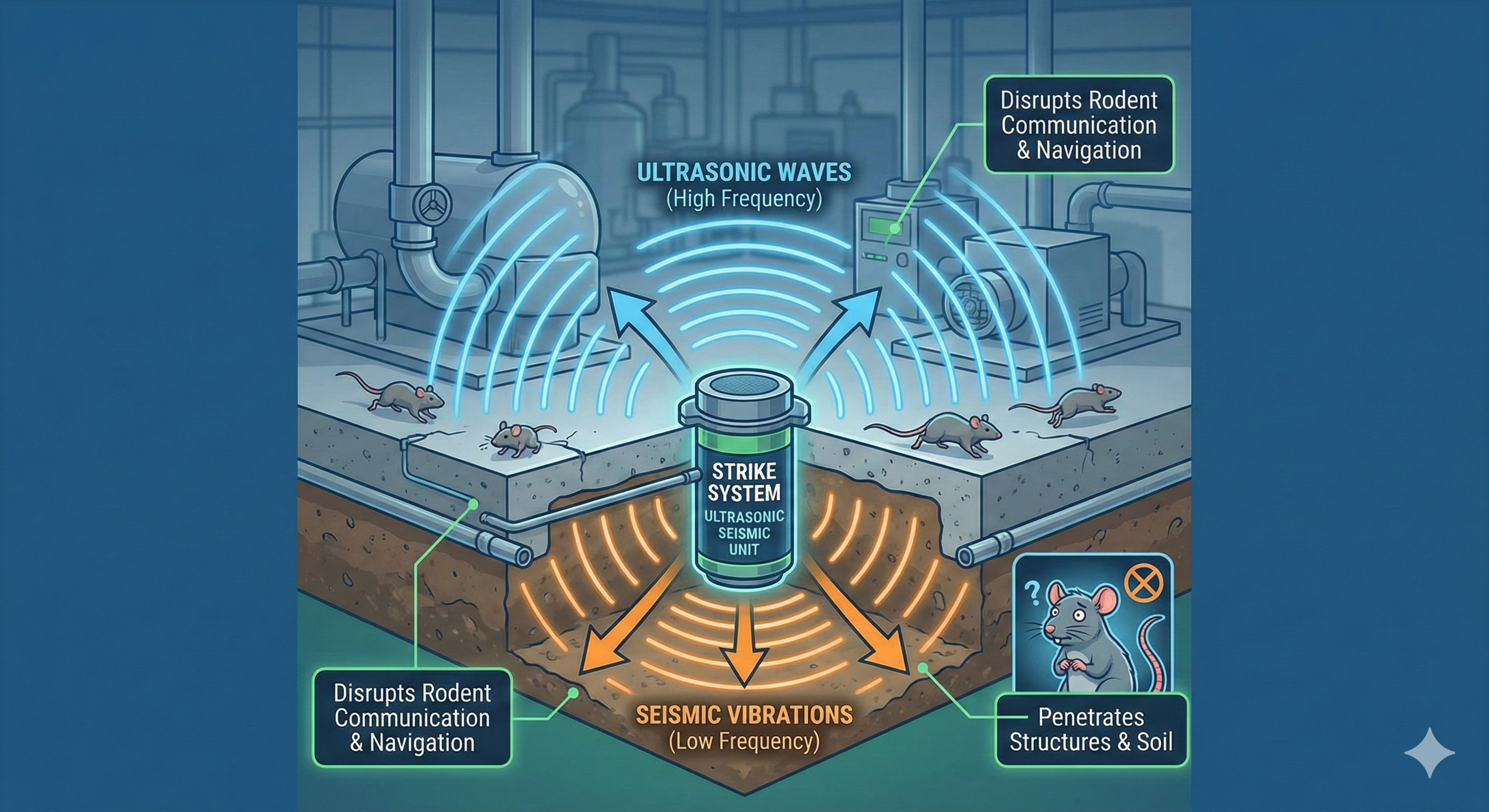
Table of Contents
- Why rodent control is changing in energy plants by 2026
- How ultrasonic and seismic rodent systems actually work
- Comparing 2026 rodent control options for energy facilities
- Smart monitoring, AI prediction, and multi site visibility
- Designing an ultrasonic seismic plan for power and utility sites
- Is ultrasonic seismic right for your facility in 2026?
- FAQ: Ultrasonic seismic rodent control in industrial plants
Why rodent control is changing in energy plants in 2026
Rodent problems in power and industrial environments are not a housekeeping nuisance. They are an operational risk. In facilities with high voltage, complex automation, and continuous processes, a single gnawed cable or shorted panel can cascade into safety incidents, outages, and expensive emergency repairs.
Key risks in utilities and industrial energy sites include
- Electrical failures
Rodents chew insulation, control wires, and fiber lines. As industry reporting and case studies on wildlife and power plants show, animals are a persistent cause of outages and grid disturbances, especially at substations and switchyards.
Reference: Wildlife and Power Plants, Power Magazine
https://powermag.com/wildlife-and-power-plants-new-solutions-for-animal-problems/ - Fire and arc flash hazards
Damaged cables, nesting materials in enclosures, and contaminants in MCC rooms increase ignition risks. - Equipment downtime and production loss
Shutting down a turbine, boiler, compressor, or main line to locate and repair rodent damage can cost far more than any pest control contract. Western power utilities, for example, have documented tangible benefits from dedicated pest control devices on transmission assets.
Reference: Pest Control Devices Prove Effective at WAPA Facilities
https://wapa.gov/pest-control-devices-prove-effective/ - Contamination in sensitive zones
In combined heat and power facilities serving hospitals, data centers attached to plants, or co-located food processing, rodent droppings and carcasses are unacceptable from a hygiene, regulatory, and customer standpoint.
At the same time, the way operators are allowed and expected to respond is changing.
Regulatory and ESG pressure against widespread poisons
Rodent poisons (rodenticides) have been a standard tool for decades, but they come with growing drawbacks in critical infrastructure environments:
- Secondary poisoning of raptors and wildlife
- Risks to non target animals and, in some contexts, pets or livestock
- Concerns about residues and dead rodents in hard to reach plant areas
- Regulatory and investor pressure to minimize toxic chemicals, especially where ESG and corporate sustainability targets apply
Organizations like the Center for Biological Diversity highlight these risks and actively promote non toxic rodent control methods, including exclusion, habitat modification, and device based deterrents.
Reference: Safe Rodent Control, Center for Biological Diversity
https://biologicaldiversity.org/campaigns/Safe-Rodent-Control/rodent-control-solutions.html
For energy producers and industrial utilities, this translates into:
- Preference for chemical free control methods
- Tighter documentation of pest management approaches
- Integration of pest risk into overall environmental, health, and safety (EHS) programs
The 2026 trend: always on, data driven, chemical free
Industry analyses of pest control and facility management technology point in the same direction. Leading resources on 2026 pest management tools and trends describe:
- Rapid growth in smart devices, IoT monitoring, and automation in pest programs
https://www.pestbase.ai/blog/best-tools-for-pest-management-in-2026-digital-solutions-that-scale - Integration of pest control into broader digital workflows and compliance reporting
https://www.pestpac.com/blog/pest-control-statistics-industry-trends-to-look-out-for/ - Increased reliance on electronic sensors, mobile systems, and connected devices in technician toolkits
https://fieldworkhq.com/2025/11/27/top-pest-control-tools/
Energy facilities that plan capital and operational strategies through 2026 and beyond are therefore asking:
How can we move from reactive poisoning and trapping to proactive, always on, data rich systems that deter rodents before they cause damage?
Ultrasonic and seismic rodent deterrence is one of the most promising answers.
How ultrasonic and seismic rodent systems actually work
Strike System specializes in industrial grade rodent deterrent systems that combine ultrasonic sound and seismic vibration. Both technologies are invisible, silent to humans, and non toxic, yet highly disruptive to rodent behavior.
Definition: Ultrasonic deterrence
Ultrasonic deterrence uses high frequency sound waves, above the range of human hearing, to create a hostile acoustic environment for rodents. The changing patterns of sound make it difficult for rats and mice to communicate, navigate, and feel secure, which encourages them to leave the protected area.
Definition: Seismic vibration deterrence
Seismic deterrence uses low intensity mechanical vibrations, transmitted through structures and surfaces, to disturb rodents in walls, conduits, trays, and voids. These vibrations mimic threatening or unfamiliar physical cues in the environment, prompting rodents to avoid or abandon the area.
Plain language explanation
In practice, a Strike System installation for an energy plant includes:
- Ultrasonic emitters
These are compact devices installed in rooms, galleries, or voids that need protection. They emit acoustic signals specifically tuned to rodent hearing ranges. - Seismic vibrators
These devices are attached to structural elements or cable support systems. They send controlled vibrations into the material, making it uncomfortable for rodents to nest or travel along those routes. - Adaptive frequency patterns
Instead of a constant tone, the systems continuously vary frequency, intensity, and patterns. Rodents are intelligent and can habituate to repetitive stimuli; adaptive patterns are intended to prevent this adaptation and maintain deterrence over time. - Networked controllers
Controllers coordinate multiple devices across zones. In advanced Strike System installations, they can be tied into monitoring and software platforms for real time visibility and control.
Why this matters for industrial environments
- Silent and worker friendly
The ultrasonic spectrum used is inaudible to people. Seismic vibrations are low intensity and do not interfere with normal operations. Staff can work, communicate, and rest as usual in protected areas. - Non toxic and residue free
There are no baits, poisons, or chemical residues. This is particularly important for plants that serve sensitive customers or share infrastructure with food, pharmaceutical, or data center operations. - Infrastructure safe
Properly engineered seismic intensity levels are designed to stay well below thresholds that might affect equipment, mounting structures, or sensitive electronics. Systems are aligned with industrial standards and Strike System’s Italian engineered devices are certified to HACCP, CE, and ISO standards, supporting use in demanding technical environments. - Continuous operation
Unlike traps that only act when a rodent approaches or poisons that depend on repeated consumption, ultrasonic and seismic systems work continuously. They are designed to turn protected zones into long term “no go” spaces for rodents.
Comparing 2026 rodent control options for energy facilities
Operations leaders evaluating rodent strategies for 2026 face a crowded toolbox: traditional poisons, mechanical traps, smart traps with IoT sensors, and device based deterrence such as ultrasonic seismic systems. Each has strengths and limitations.
The following high level comparison focuses on energy and utility environments.
Comparison table: rodent control options for energy and industrial plants
| Method | Main pros | Main cons | Best use in 2026 |
|---|---|---|---|
| Poisons (rodenticides) | Familiar, relatively low upfront cost, can quickly reduce populations in some settings | Risk of secondary poisoning to wildlife, carcasses in inaccessible areas, regulatory and ESG concerns, not targeted, does not prevent re entry | Limited, tightly controlled use in extreme situations where other methods are not yet deployed |
| Conventional traps (snap traps, glue boards) | Simple, visible results, no chemicals, easy for small sites | Labor intensive inspections, limited coverage in complex plants, ongoing handling of carcasses, reactive rather than preventive | Small technical rooms or temporary use during construction and commissioning |
| Smart traps (IoT enabled) | Automated alerts when rodents are captured, digital records for audits, reduced inspection labor, supports data driven IPM programs | Still reactive, requires physical access for servicing, cannot protect large inaccessible runs, some reliance on baiting or attractants | Integrated pest management supporting documentation and hotspot analysis, especially in accessible indoor areas |
| Ultrasonic seismic systems (Strike System type) | Continuous deterrence without chemicals, designed for complex infrastructure, low routine labor after installation, compatible with ESG and HACCP, can integrate with IoT monitoring and AI analytics | Requires upfront design and installation, effectiveness depends on correct placement and commissioning, may need to be combined with exclusion and sanitation | Core preventive layer for substations, turbine halls, cable galleries, control rooms, and high value industrial utilities |
Respecting pest control partners and legacy methods
Traps and even well managed baiting programs remain part of many integrated pest management (IPM) plans. Smart traps and connected bait stations, highlighted in current industry tools lists, deliver better data and operational efficiency than purely manual programs.
However, for high risk energy facilities where:
- Access is difficult
- Infrastructure is dense and mission critical
- Outages carry large financial and reputational costs
a prevention first model built around ultrasonic seismic deterrence, supported by select smart monitoring devices, offers a stronger resilience profile for 2026 and beyond.
Smart monitoring, AI prediction, and multi site visibility
Ultrasonic and seismic hardware is only part of the story. The real power comes when these devices are connected to a modern monitoring and analytics layer.
Role of IoT sensors and real time alerts
Modern pest management tools for 2026, as described by digital pest platforms and field service providers, increasingly rely on:
- Networked sensors that detect rodent movement or trap activity
- Gateways that relay data to cloud platforms
- Mobile apps for technicians and facility staff
This same IoT approach can support ultrasonic seismic installations:
- Controllers report device status, coverage zones, and any anomalies
- Optional motion or activity sensors confirm reduced rodent presence over time
- Alerts notify staff if a device needs attention, power, or relocation
AI powered trend prediction
Once multi month data on rodent activity, environmental conditions, and equipment alarms is available, AI powered analytics can help:
- Identify seasonal peaks in rodent pressure
- Correlate activity with weather, nearby construction, or waste handling patterns
- Predict which substations or plant zones are likely to see increased risk
Industry sources focused on 2026 pest tools note that AI and automation are becoming key differentiators in scalable pest programs, enabling proactive interventions instead of reactive crisis response.
Central dashboards for multi location operators
For utilities and industrial groups operating multiple plants or substations, cloud based dashboards provide:
- Map based visibility of rodent protection and monitoring coverage
- Summary compliance and documentation across all sites
- Easy reporting for EHS, ESG, and audit requirements
Strike System solutions are designed to integrate into this type of ecosystem, with networkable controllers and an architecture suitable for centralized oversight. For large enterprises, this turns rodent control from a local, vendor specific issue into a standardized, managed risk across the portfolio.
Designing an ultrasonic seismic plan for power and utility sites
The success of ultrasonic seismic rodent control depends heavily on planning. Energy and industrial plants are complex, with varied building types, underground structures, and critical zones.
Below is a practical framework to start.
Checklist: assessing rodent risks in energy and utility facilities
Use this checklist as a baseline assessment tool:
Site and layout
- List all substations, switchyards, and control buildings
- Map cable trenches, tunnels, and overhead trays
- Identify remote or unmanned sites with limited routine inspections
Electrical and mechanical equipment
- Turbine halls, generator rooms, and boiler houses
- MCC rooms, switchgear rooms, and relay panels
- Transformer bays and capacitor banks
Access and shelter points
- Building penetrations, pipe chases, and cable entries
- Storage areas for spares, packaging, or insulation materials
- Warm zones near steam lines, condensate systems, or HVAC units
Evidence of rodent activity
- Droppings, gnaw marks, or nesting materials
- Damaged cable insulation or sealant
- Repeated alarms or unexplained trips in specific panels
Current controls and gaps
- Locations of existing traps or bait stations
- Any recorded incidents or outages linked to wildlife or rodents
- Known “blind spots” where manual inspection is difficult or unsafe
Step list: planning and deploying an ultrasonic seismic system in a power plant
Once the assessment is complete, a structured deployment approach helps ensure coverage and ROI.
- Define protection objectives
- Prevent cable and control failures in critical circuits
- Protect specific substations or plant areas with past incidents
- Align with corporate ESG by reducing or eliminating poison use
- Engage technical experts for on site or engineered review
- Share single line diagrams, cable routing drawings, and building plans
- Provide incident history and current pest control reports
- Work with Strike System engineers to identify priority zones
- Design zone based coverage
- Group areas into zones such as “turbine building”, “main substation”, “cable tunnel A”
- Determine where ultrasonic emitters are most effective (open rooms, voids)
- Determine where seismic devices best protect long runs (cable trays, structural beams)
- Specify device types, densities, and controllers
- Select appropriate ultrasonic and seismic units based on volume and structure type
- Plan device spacing to avoid acoustic shadows or vibration gaps
- Assign devices to networked controllers that can be monitored centrally
- Coordinate with other trades and systems
- Align installations with electrical safety protocols and lock out procedures
- Avoid interfering with thermal insulation, earthing systems, or cable clearances
- Plan any needed supports or enclosures for harsh environments
- Install, commission, and document
- Install devices according to the engineered plan
- Verify power supply and controller communication
- Document locations, serial numbers, and coverage in a digital map or CMMS
- Integrate with monitoring and IPM program
- Connect controllers to existing IoT gateways or monitoring platforms where available
- Coordinate with pest control vendors so that traps and inspections complement deterrence zones
- Build rodent risk and device status checks into routine facility inspections
- Review effectiveness and optimize
- Track any new signs of rodent activity after deployment
- Adjust placement in response to structural modifications or process changes
- Periodically review data with Strike System specialists to refine coverage over time
Strike System’s engineering driven approach focuses on this type of tailored design, recognizing that no two plants or utility networks are identical.
Is ultrasonic seismic right for your facility in 2026?
Ultrasonic seismic systems are not a universal replacement for every rodent control method, but they are particularly well suited to energy and industrial environments with:
- High consequence of failure
- Complex cable and equipment layouts
- Limited tolerance for poisons and constant trapping
- Ambitious ESG and sustainability goals
When chemical free tech outperforms traditional options
Consider prioritizing ultrasonic seismic deterrence when:
- The main risk is damage to infrastructure, not food contamination
- Rodent access points cannot be fully sealed, but their movement routes can be disrupted
- You want to prevent nesting and travel in trays, conduits, and voids rather than focusing only on killing individual animals
Cost, downtime, and ESG benefits over 3 to 5 years
While precise financial outcomes vary by site, a typical medium term view includes:
- Reduced emergency outages and unscheduled repairs related to rodent damage
- Lower routine labor costs compared with constant trap checks across complex facilities
- Decreased use of toxic rodenticides, supporting ESG reporting and stakeholder expectations
- Higher audit readiness for customers and regulators that expect documented, non toxic control methods
Decision checklist
Use this quick checklist to decide whether to explore ultrasonic seismic systems for your 2026 strategy:
- Do you operate substations, switchgear rooms, or cable galleries that are costly to access and inspect?
- Have you experienced rodent related damage or unexplained electrical faults in the last few years?
- Are you under pressure to reduce poisons or align pest control with ESG commitments?
- Do you have multiple facilities that would benefit from standardized, data driven rodent control?
- Would a one time, engineered installation with low routine maintenance better fit your staffing and budget reality than intensive manual programs?
If you answered “yes” to several of these questions, it is worth engaging Strike System for a site review and concept design. Visit https://strikesystem.com/ to learn more about their ultrasonic and seismic solutions for critical infrastructure, or contact the team to discuss your specific plants and utility assets.
FAQ: Ultrasonic seismic rodent control in industrial plants
Are ultrasonic rodent systems safe for people working nearby?
Yes. Industrial ultrasonic systems are designed to operate at frequencies above the range of human hearing. Workers do not hear the signals under normal conditions, and there is no chemical exposure. As with any industrial installation, systems should be designed and installed by qualified professionals following applicable safety standards.
Will the vibrations affect sensitive equipment or structures?
Properly engineered seismic deterrent systems operate at low intensity levels that are not intended to disturb equipment, structures, or instrumentation. During design, Strike System engineers consider the type of structures, mounting details, and nearby sensitive equipment to ensure compatibility.
Can ultrasonic and seismic systems be used around control rooms and data systems?
Yes, they are specifically intended for use around electrical and electronic infrastructure. The devices are mounted and powered in ways that respect electrical clearances and standards. As with any new equipment, coordination with your electrical and IT teams during design and installation is essential.
Will rodents become used to the sound or vibration over time?
Static, unchanging signals can lose effectiveness as rodents habituate. Strike System devices are designed with adaptive frequency and pattern variation to reduce this risk and maintain a hostile environment for rodents over the long term. Effectiveness still depends on correct coverage and integration with good exclusion and sanitation practices.
Do we still need traps or other methods if we install ultrasonic seismic systems?
In many facilities, ultrasonic and seismic systems become the preventive backbone of rodent control, while traps and, where appropriate, limited baiting are used as targeted tools. This follows integrated pest management principles, where multiple complementary methods reduce risk and reliance on any single tool.
How quickly will we see a reduction in rodent activity?
In many cases, rodents begin to avoid protected areas within days to weeks, as their communication and navigation are disrupted. For entrenched populations or heavily infested structures, more time may be needed, and combining deterrence with exclusion and cleanup of harborage areas leads to faster results.
For detailed assessment, design, and implementation guidance tailored to your energy or industrial sites, reach out to Strike System through https://strikesystem.com/ and explore how ultrasonic seismic technology can fit into your 2026 rodent control strategy.