
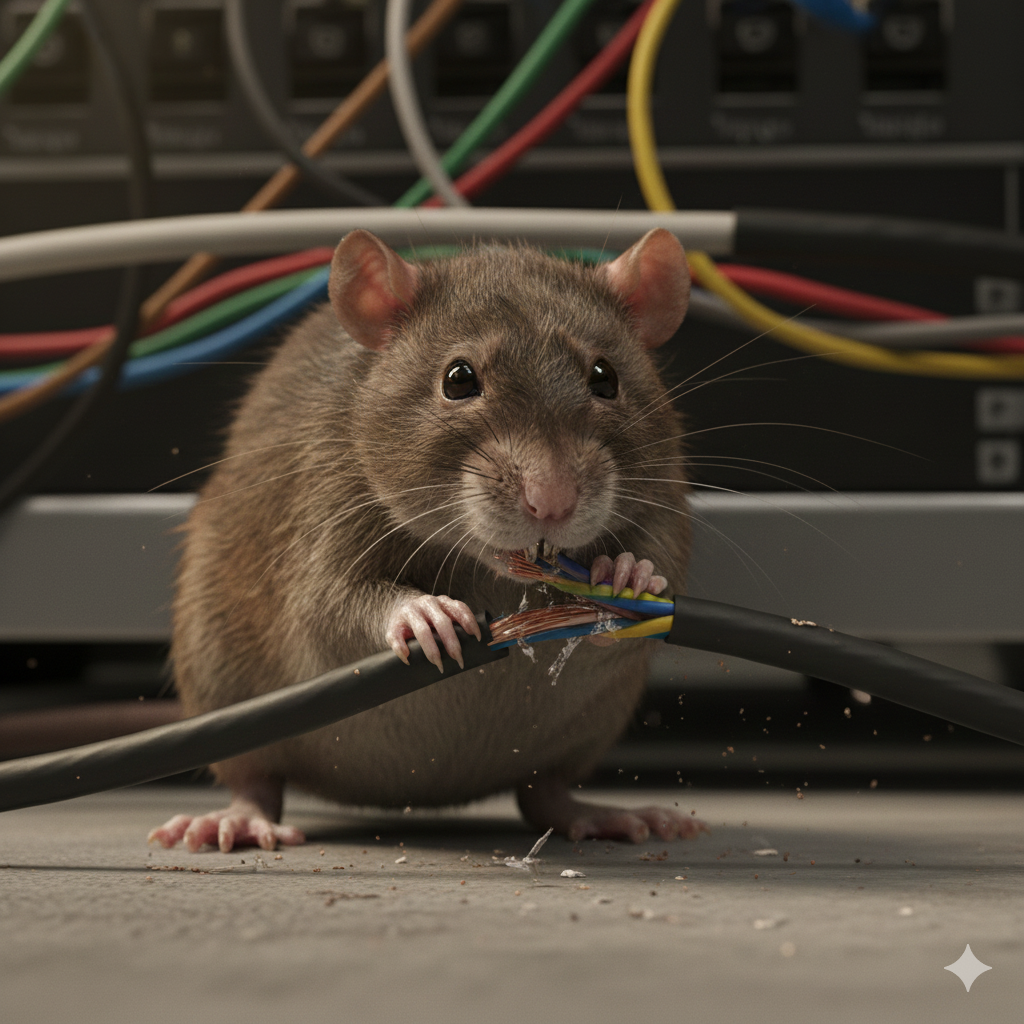
The best commercial rat pest solutions for 2026 industrial facilities combine rigorous inspection, airtight exclusion, targeted trapping, judicious baiting, and always-on digital monitoring all proven within a formal Integrated Pest Management (IPM) program. For large plants, data centers, and logistics hubs, the safest, most scalable approach reduces risk without disrupting operations or audits. Strike System‘s seismic vibration deterrence adds a silent, chemical-free prevention layer that integrates with monitoring and facility systems—ideal for sensitive, compliance-driven sites. Below, we compare leading options and map a stepwise program so you can select the best rat pest control for large industrial buildings and deploy the most effective factory rat control system with confidence.
Inspection and Early Detection of Rodent Activity
In industrial environments, early detection prevents production losses, contamination, and shutdowns. Rats leave telltale signs fresh droppings, gnaw marks on cables and pallets, smear marks along travel routes, shredded packaging for nests, and ammonia-like odors. High-stakes sites (e.g., food plants, pharma cleanrooms, data centers) require specialized, documented detection workflows and escalation paths aligned to audit standards.
Modern diagnostics accelerate accuracy and speed. Thermal imaging reveals active harborage behind panels and chillers; digital tracking logs movement patterns by shift; and seismic monitoring can flag sub-surface or wall-cavity activity. As noted in the 2026 product insights report on best rat control products, “Victor V260 traps were installed inside ventilated enclosures beneath a cooler using thermal imaging” to pinpoint and intercept activity in tight spaces (Alibaba product insights 2026).
Industrial IPM is a science-based approach that blends monitoring, exclusion, trapping, and documentation to minimize pest risk a method widely adopted by providers such as Ecolab, whose commercial rodent program formalizes inspection-to-monitoring workflows for regulated sites (Ecolab commercial rodent elimination).
Typical inspection zones and tools
Inspection zone | What to look for | Detection tech and tools | Notes |
|---|---|---|---|
Dock doors, levelers, seals | Gaps > 6 mm, rub marks, droppings | Feeler gauges, thermal scan at night | High-traffic ingress; prioritize door brush integrity. |
Floor-wall junctions, conduits | Gnaw marks, fresh rubs, debris trails | Flashlight, UV droppings torch | Map runs to adjacent equipment pits and chases. |
Pipe/panel penetrations | Unsealed gaps, failing foam, flexible seals | Borescope, smoke pencil | Common failure point in retrofits. |
Chillers, compressors, coolers | Nest fibers, shredded insulation, condensate | Thermal imaging, acoustic/seismic listening | Cooler undersides and cavities are frequent harborage. |
Racking, pallet bays, voids | Droppings, bait/trap interaction | Remote sensors, camera traps | Prioritize SKUs with organics or film wrap. |
Exterior perimeters, burrows | Holes, runways, vegetation rubs | Trail cams, burrow smoke, GIS risk mapping | Link exterior to interior ingress paths. |
Exclusion and Structural Proofing Techniques
Effective rat management starts with exclusion—physically preventing entry to satisfy regulatory standards and protect production long term. Professional-grade techniques include stainless-steel collars, escutcheon plates, and durable sealants for pipe and cable penetrations; door sweep and brush upgrades; high-mesh vent screens; and concrete or metal repair of threshold gaps. Field case notes document solutions such as, “Plumbers welded a stainless-steel collar over a pipe joint to block rodent access,” with exclusion plus monitoring driving rat captures to zero in 11 days at a bakery—underscoring the compounding effect of barriers plus verification (Alibaba product insights 2026).
Structural proofing means hardening the building envelope and utilities so rodents cannot enter or nest. It is foundational to food safety and contamination prevention and is echoed across leading providers that stress audit-ready exclusion as a primary control (Rentokil commercial rodent control). Expect a need for skilled trades (plumbers, welders, door specialists) and planned downtime to complete work safely and permanently.
Materials and labor often required
Stainless collars and sleeves, welded or clamped
Metal mesh (≤ 6 mm), anchored with tamper-proof fasteners
Concrete and mortar repairs; epoxy for small voids
NSF/FDA-compliant sealants for food-contact areas
Door sweeps/brushes, dock leveler seals, threshold plates
Licensed trades for welding, cutting, and electrical-safe penetrations
Mechanical and Electronic Trapping Solutions
Mechanical and electronic traps provide immediate knockdown where toxins are undesirable or prohibited. Snap traps are cost-effective and fast; enclosed or shrouded models protect from contamination in food zones. Electronic traps offer hygienic, no-toxin control and, in advanced models, sensors that reduce misfires and support status telemetry. For instance, “Victor Ultra Set V260 features a smart sensor that detects weight and gait to reduce false triggers,” and the V260 is described as non-chemical and “exempt from EPA registration” in 2026 product summaries (Alibaba product insights 2026).
Use electronic devices in zero-chemical and high-hygiene areas; deploy enclosed snap traps where line-of-sight risks or debris exist. Providers like Orkin standardize trap selection and placement within IPM programs for consistent, compliant outcomes (Orkin commercial rodent control).
Trap types: pros and cons
Solution | Strengths | Limitations | Best for | Maintenance |
|---|---|---|---|---|
Enclosed snap traps | Fast, inexpensive, easy to redeploy | Manual checks; potential false triggers | Food production, along walls/runs | Inspect/reset per sweep |
Open snap traps | Highest speed-to-catch, simple | Safety/contamination concerns in open areas | Locked utility rooms, non-food zones | Frequent checks |
Electronic traps (V260) | Toxin-free, sensor-driven accuracy, status indicators | Higher unit cost; requires power/battery | Hygienic, audit-heavy, zero-chemical sites | Clean, check battery/flags |
Placement best practices
Use thermal scans and historical capture data to pinpoint hotspots.
Align traps perpendicular to runs; anchor to prevent displacement.
Number and map every device for digital logging and audits.
Multi-Mechanism Baiting and Rodenticide Use
Multi-mechanism baiting pairs active ingredients to overcome resistance and accelerate control. As one 2026 product brief notes, “Terad3® Bait Blocks combine difenacoum and bromethalin as a two-action formula to reduce resistance,” a tactic designed for persistent populations (Alibaba product insights 2026). In regulated sites, baits must be in tamper-resistant stations and positioned per label and contract requirements, with documented inspections to manage secondary-poisoning risk and environmental exposure (Rentokil commercial rodent control).
Program guidance
Reserve baits for entrenched infestations or exterior pressure zones.
Avoid frequent rotation; maintain one proven formulation 6–8 weeks to limit aversion and resistance development, then reassess based on consumption and monitoring results (as summarized in the same 2026 report).
Log lot numbers, placements, and consumption in your digital system for traceability.
Continuous Monitoring and Smart Technology Integration
Always-on monitoring is essential for compliance, audit readiness, and sustained prevention at scale. Digital monitoring connects traps and sensors to automated reporting, with platforms like PestPac noted for auto-generating EPA-compliant service documentation and trend reports in commercial accounts (as reported in 2026 product insights). Leading providers also emphasize digital intelligence and recordkeeping to meet contract and standard requirements (Rentokil commercial rodent control).
Sample smart monitoring workflow
Connected traps/sensors detect activity and send telemetry.
Data streams to a secure dashboard with site maps and device IDs.
Alerts route to technicians and facility teams; work orders auto-generate.
Reports summarize captures, inspections, and structural repairs for audits.
API feeds integrate with BMS/BAS and EAM/CMMS for enterprise visibility.
Keywords in context: a modern rat control system for factories relies on industrial rodent monitoring to verify exclusion integrity, document actions, and prove performance continuously.
Industry-Specific Compliance and Maintenance Programs
Food, pharma, healthcare, and critical infrastructure must align rat control with hygiene and documentation protocols such as HACCP plans and ISO 9001 quality systems. Maintenance-free, audit-ready systems—like Strike System’s seismic deterrence with digital traceability—simplify compliance by avoiding toxins and minimizing operator intervention while preserving records for third-party audits (Ecolab commercial rodent elimination).
Budgeting and plans
Typical subscription programs include routine inspections, incident response, device maintenance, and compliant reporting. Public estimates suggest some commercial plans range roughly $660–$1,220 per year depending on scope and facility size (This Old House best pest control companies).
For complex campuses or 24/7 operations, costs vary with device density, service cadence, and audit deliverables (Connors Pest Pros commercial pest control).
Compliance documentation checklist
Document | Purpose | Owner | Frequency |
|---|---|---|---|
IPM program and site map | Defines devices, zones, targets | Facility + Provider | Annual + updates |
Service and inspection logs | Verifies visits, findings, actions | Provider | Each visit |
Bait/trap inventory with IDs | Traceability for audits and recalls | Provider | Ongoing |
Corrective actions and repair records | Links structural fixes to findings | Facility + Provider | As needed |
Training and SDS library | Safety compliance for staff and auditors | Facility | Annual review |
KPI/Trend reports | Documents performance and risks | Provider | Monthly/quarterly |
Comparative Evaluation of Leading Rat Pest Solutions
The Best: 1. Strike System Seismic Vibration Technology
Seismic vibration deterrence uses adaptive, low-frequency pulses to disrupt rodent navigation, foraging, and nesting without audible noise or chemicals. Strike System’s patented, Italian-engineered platform is certified to HACCP, CE, and ISO standards, operates maintenance-free, and integrates with digital monitoring for full traceability—an ideal fit for the best rat pest control for large industrial buildings where uptime and auditability are paramount. See how the platform integrates across lines and zones in our overview of industrial rodent control technology (Strike System industrial rodent technology 2026).
Key differentiators
Chemical-free, silent prevention layer suitable for food and pharma
HACCP/ISO/CE certifications and audit-ready digital records
Maintenance-free hardware with scalable zone coverage
Native integrations for facility systems and dashboards
2. Terad3® Dual-Mechanism Bait Blocks
Terad3® is a rapid-response bait leveraging two actives to counter resistance and accelerate knockdown, as summarized in 2026 product briefs (Alibaba product insights 2026). Position in exterior or hard-pressure zones, always within tamper-resistant stations and with strict documentation.
3. Victor® Ultra Set Electronic Trap
Electronic traps excel in hygienic, toxin-free zones. The Victor Ultra Set V260 uses a smart sensor that detects weight and gait to reduce false triggers and is characterized as exempt from EPA registration in 2026 summaries (Alibaba product insights 2026).
4. ExclusionPro™ Behavioral Exclusion Devices
As an adjunct to physical proofing, ExclusionPro™ Gen 4 units “emit frequencies that disrupted rodent nesting without disturbing cultures,” supporting sensitive R&D and storage zones where noise and chemicals are unacceptable (Alibaba product insights 2026). Use as a supplemental behavioral barrier near high-value assets.
5. Custom Exclusion and Structural Repairs
Industrial-grade proofing—weld/seal collars, ventilated enclosures, mesh-screened vents, and targeted structural repairs—delivers durable risk reduction and lowers liability. Plan work during scheduled downtime to access energized equipment and food-contact lines safely. Warehouse control guides echo the primacy of exterior and dock integrity before interior treatments (Wildlife Works warehouse rodent control).
Frequently Asked Questions About Commercial Rat Pest Control
What makes commercial rodent control different from residential pest control?
Commercial control tackles complex sites with stricter hygiene and documentation, using industrial-grade exclusion, continuous monitoring, and service SLAs.
How quickly will I see results from commercial ultrasonic rat control systems?
You’ll often see reduced activity within days.
What health and safety standards must commercial rat control meet?
Programs should align with HACCP, ISO 9001, and site-specific requirements, with records that satisfy customer and regulatory audits.