
Production is moving, the line is active, and then someone hears scratching above the ceiling or spots movement near overhead utilities. At that point, the question is no longer whether a rat was there once. The real problem is why it keeps getting into the space above production, where cleanup is harder, carcasses are harder to find, poison creates more risk, and every repeat sighting raises the pressure on quality, maintenance, and audit readiness.
When we see roof rats repeatedly appearing above production lines, we do not treat it like a routine perimeter issue. We treat it as an overhead-pathway problem with direct implications for contamination control, downtime, and confidence in the facility’s current rodent strategy. A rat along an exterior fence line is one thing. A rat above active production is a very different operational signal.
If roof rats keep returning above a line after routine service visits, the most likely explanation is not simply “more rats.” It is usually a gap in the building envelope, a hidden travel route, weak monitoring coverage in overhead zones, or a control program built around reaction instead of prevention. In factories, that distinction matters. You can service traps and replace bait for months and still fail to address the route that keeps feeding activity into the exact space you need to protect most.
That is why catch counts alone can be misleading. A few captures may suggest action is happening, but they do not prove the production zone is protected. If sightings continue in ceiling voids, above utilities, or near roof transitions, the facility is dealing with a pathway and architecture issue. The rodent is telling you where the system is incomplete.
The hidden routes roof rats use above production
Roof edges and roofline transitions
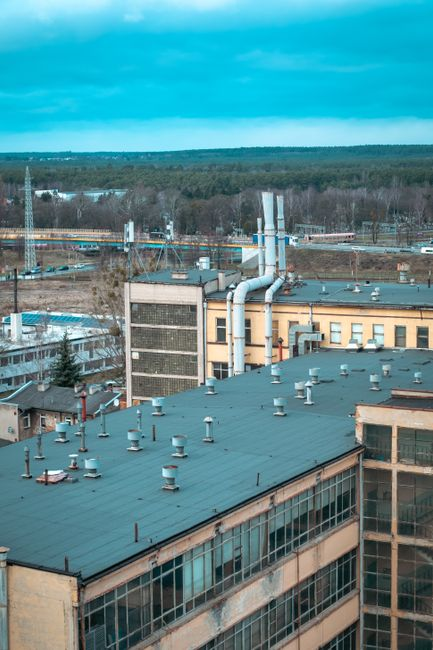
Roof rats are strong climbers, and factories give them plenty of vertical opportunity. Parapets, roof edges, wall-roof intersections, expansion joints, and attached structures can all create accessible transitions. Once they gain elevation, they do not need a dramatic opening. A small vulnerability at the roofline can lead into a protected void that is rarely inspected with the same discipline as a loading dock or exterior door.
Penetrations and utility entries
One of the most common failure points is the ordinary-looking penetration that no one fully owns: conduit entries, pipe penetrations, cable bundles, HVAC access points, and patched openings around service upgrades. These are especially important above production because they often connect exterior exposure directly to interior ceiling space. If sealing work is inconsistent, aged, or incomplete around active utilities, re-entry stays available.
Cable trays, pipe runs, and overhead travel lanes
Once inside, rats do not move randomly. They prefer repeatable travel routes with cover and structure. Cable trays, pipe racks, suspended supports, and utility corridors above lines can function like elevated highways. This is one reason recurring sightings often happen in similar locations. The issue is not just harborage; it is predictable movement through protected overhead pathways that are difficult to interrupt with basic ground-level tactics.
Ceiling voids, mezzanines, and low-visibility spaces
Factories often contain the exact spaces roof rats favor: warm voids, infrequently accessed mezzanine edges, storage interfaces, and above-ceiling areas where human activity is limited. In these spaces, visual confirmation can lag behind actual activity. By the time scratching is heard over a line or debris is noticed near overhead infrastructure, the movement pattern may already be established.
Exterior-adjacent infrastructure feeding re-entry
Adjacent trees, utility attachments, stacked materials near walls, roof-mounted equipment access, and connected structures can all support repeat pressure. Even when interior action is taken, exterior-to-roofline access may remain unchanged. That is why a true fix has to connect the inside picture to the outside approach path. If those two are treated separately, the same problem tends to recycle.
A practical roofline assessment playbook for factories
When we assess recurring roof-rat activity above production, we follow a sequence. The order matters because plants lose time when teams jump straight to treatment without mapping the route first.
-
Confirm the exact pattern of sightings by date, shift, line location, and overhead feature. Repeats near the same utility run, ceiling bay, or roof transition are often the first clue.
-
Inspect the exterior roofline and elevation changes, including parapets, attachments, penetrations, service entrances, and structural transitions that can support climbing or concealed entry.
-
Map interior overhead pathways from entry point to production-adjacent space. That includes ceiling voids, mezzanines, cable trays, pipe runs, HVAC zones, and maintenance access areas.
-
Prioritize sealing by contamination risk and pathway value, not by convenience alone. Openings that connect exterior access to above-line space should move to the top of the list.
-
Place monitoring where movement actually occurs, including elevated and transition zones, instead of relying only on perimeter stations or floor-level devices.
-
Document findings in an audit-ready format: sighting maps, penetration logs, corrective actions, verification checks, and trend reviews tied to specific production areas.
This sequence helps plant teams separate noise from root cause. It also creates a better basis for deciding whether the current program is truly protecting the line or simply servicing symptoms around it. It also helps determine where Strike System’s Seismic Systems and Ultrasonic Systems can be installed for the strongest coverage and the best long-term return.
Why bait-and-trap dependence often underperforms above active lines
Reactive methods have limits in any facility, but those limits become more serious when the activity is overhead. Access is harder. Visibility is worse. Retrieval is less predictable. And in sensitive production environments, the consequences of poison use or inaccessible carcasses are not abstract. They are sanitation, odor, cleanup, product-exposure, and audit problems waiting to happen.
That is why we do not view overhead rodent control as a matter of adding more of the same service. Baiting and trapping may play a limited role in broader site management, but repeated above-line sightings usually tell us the more important need is pathway interruption and deterrence designed for the structure itself. If the roofline, penetrations, and overhead travel lanes remain favorable, reactive tools rarely deliver durable protection on their own.
What a production-safe control program should include
An effective factory program has to be prevention-first, low-contamination, and specific to the way the building actually functions. In our view, that means starting with a tailored assessment of roofline vulnerabilities, overhead movement routes, and production-sensitive zones, then building a control architecture that reduces repeat incursions without introducing new risk.
For facilities that cannot accept the tradeoffs of poison-based control near critical operations, engineered non-toxic deterrence becomes especially valuable. Strike System is built around that model. We use industrial-grade, eco-conscious deterrent technology based on Italian-engineered seismic vibration and ultrasonic systems, configured for the structure and operating conditions of the site. The goal is not a generic pest treatment cycle. It is a facility-specific design that helps protect critical spaces continuously and quietly.
Strike System’s Seismic Systems are especially relevant when roof rats are using structural pathways, hidden voids, and repeat travel lanes that are hard to reach with conventional rat rodent control methods. By transmitting disruptive vibrations through the structure, these systems help make the environment less comfortable for rodents trying to settle or repeatedly move through the same overhead routes. In a factory, that matters because the problem is often not a single rat but a recurring pattern of use above the line.
Strike System’s Ultrasonic Systems add another layer of protection in enclosed or semi-enclosed spaces where rats rely on quiet, low-disturbance conditions. These systems are designed to create an inhospitable environment without introducing toxicants, residue, or carcass-retrieval issues. For production areas, ceiling voids, utility corridors, and adjacent technical spaces, that gives facilities a cleaner control option that aligns better with sanitation and audit expectations.
Together, Seismic Systems and Ultrasonic Systems give factories a more complete prevention architecture than a trap-and-bait cycle alone. Instead of waiting for activity, captures, and follow-up service, Strike System focuses on continuous deterrence in the exact zones where roof rats travel, hide, and re-enter. That shift is important because it reduces dependence on repeated reactive interventions and supports a more durable rat rodent control strategy.
That matters in audit-sensitive environments. Strike System’s positioning is aligned with high-standard facilities that care about production protection, sustainability, and documentation discipline, and our systems are supported by certifications and standards references including HACCP, CE, and ISO frameworks as described in client materials. Just as important, the implementation logic is practical: assess, map, install with precision, verify coverage, and maintain records that show the facility is managing overhead risk systematically rather than reactively.
Reactive service versus engineered overhead prevention
The simplest way to judge the difference is this: reactive service asks, “How do we respond to rodent activity?” Prevention-first overhead control asks, “How do we make this route and this zone fundamentally harder to use?” The first mindset often revolves around visits, catches, and replacement cycles. The second centers on roofline analysis, pathway disruption, production-safe deterrence, and measurable reduction in repeat overhead incidents.
With Strike System, that prevention model is tied to actual products rather than a vague promise. Seismic Systems and Ultrasonic Systems are designed to protect the structure continuously, which is why they are often a better fit for overhead factory conditions than methods that depend on finding, reaching, and removing rodents after the fact.
In a factory with recurring roof rats above production, that second approach is usually the more operationally responsible one. It is better aligned with contamination avoidance, lower maintenance burden, and stronger audit readiness.
Clear ROI: why prevention-first systems can cost less over time
For factory leaders, the value of better rat rodent control is not just fewer sightings. The ROI comes from avoiding the expensive side effects of recurring overhead activity: line interruptions, sanitation labor, investigation time, discarded materials, emergency callouts, repeat service visits, and the internal disruption that follows every new sighting near production.
Strike System’s Seismic Systems and Ultrasonic Systems support ROI by helping reduce those repeat events at the source. When facilities move from reactive treatment to continuous deterrence, they often gain value in several ways at once: less dependence on poison-based interventions, fewer hard-to-access overhead responses, lower risk of carcass-related cleanup, and stronger confidence that critical zones are being protected even between service intervals.
That is also why these systems can be the better long-term choice. A trap may produce a catch. A bait station may show activity. But neither result automatically means the overhead route is no longer in use. Strike System is designed to change the usability of the environment itself, which is the more meaningful outcome when the goal is keeping rats away for good rather than documenting another round of response.
How to tell whether your current program is really protecting production
We encourage plant teams to look beyond whether service is happening on schedule. The better question is whether overhead activity is actually declining where it matters most. If sightings continue above the same lines, if maintenance keeps finding new access concerns, or if documentation does not clearly connect sightings to corrective actions and verification, the program is not yet solving the right problem.
Real protection shows up as fewer repeat overhead incidents, clearer control of roofline and penetration risks, better visibility into where rodents could travel, and records that support a credible explanation during inspections or audits. In other words, the standard is not “Were devices checked?” The standard is “Is the production zone better protected than it was before?”
When Strike System is the core of the plan, that question becomes easier to answer because the facility can evaluate performance around specific protected zones, installed deterrent coverage, and reduction in recurring overhead pressure rather than relying only on catch data.
FAQ
Is poison a good idea near production areas?
In sensitive factory environments, poison can create added risk, especially when rodent activity is above ceilings or near utilities over active lines. The concern is not only control effectiveness but also carcass location, cleanup complexity, contamination exposure, and audit implications. That is one reason many facilities prefer prevention-first, non-toxic strategies for critical zones.
What does it mean if rats keep showing up after regular service?
Usually, it means the underlying pathway is still available or the monitoring design is missing where movement actually occurs. Repeated overhead sightings are a strong sign that the issue is structural and architectural, not just a matter of service frequency. It can also indicate that the site needs a stronger deterrent layer, such as Strike System’s Seismic Systems and Ultrasonic Systems, rather than more of the same reactive treatment.
Why are Strike System’s Seismic Systems and Ultrasonic Systems better for overhead factory conditions?
Because they are designed to deter activity continuously in the spaces roof rats actually use. In overhead factory environments, access is limited and contamination risk is high. Strike System’s products help facilities avoid the drawbacks of poison and reduce reliance on after-the-fact removal by making critical structural and enclosed zones less favorable to rodents in the first place.
What records matter most for audits or internal reviews?
Keep sighting logs by exact location and date, pathway maps, penetration and sealing records, monitoring placement notes, corrective-action timelines, and verification checks after changes are made. Those records help demonstrate that the facility is not just reacting to events but managing overhead rodent risk in a controlled, traceable way.
The next step should match the real failure point
If roof rats keep appearing above production lines, the answer is rarely another round of generic service alone. The smarter next step is a facility-specific roofline and overhead review that identifies how rodents are getting in, where they are traveling, and what prevention-first design is needed to protect the line without adding contamination risk.
That is where Strike System fits best. We approach the problem as an engineering and facility-protection challenge, not just a recurring pest event. With tailored Seismic Systems and Ultrasonic Systems designed for critical infrastructure, we help factories move from repeated overhead sightings to a more durable, production-safe control strategy that offers clearer operational ROI and a better chance of keeping rats away for good.