
A rodent sighting near a cable pathway or support building can look like a routine pest ticket right up until the obvious fixes start creating harder questions. If the response is bait, snap traps, or a fast kill promise, who retrieves carcasses from inaccessible voids, who resets devices across a sprawling site, and who answers for the downtime or audit scrutiny if the method creates a bigger problem than the rodents did?
When we talk with California energy facilities about a “mice exterminator,” we rarely treat it as a simple pest purchase. It is usually an operations decision wrapped in a pest-control label: how to reduce rodent pressure without adding safety exposure, maintenance burden, documentation gaps, or resilience risk across infrastructure that cannot be treated like an office or a home. For many operators, that is exactly why Strike System becomes the more durable answer: not another recurring extermination cycle, but a permanent deterrence strategy designed to keep rodents away for good.
This is why the real question is not who can kill mice fastest. It is whether the proposed approach fits the facility, the risk profile, and the consequences of failure—and whether it delivers measurable return instead of locking the site into endless service visits and repeat incidents.
- Rodenticide use faces greater scrutiny in California, which makes poison-first plans harder to approve casually.
- Roof rats can matter alongside mice, especially around perimeters, overhead routes, yards, and support structures.
- Carcass retrieval is not a small issue when pests can die in voids, conduits, or hard-to-access building spaces.
- Audit and documentation questions become sharper when methods introduce chemical, sanitation, or inspection concerns.
- At an energy site, even a localized rodent issue can escalate into labor drain, repeat service calls, equipment risk, and avoidable operational disruption.
Energy infrastructure changes what “effective” means. A conventional extermination program might be acceptable for basic nuisance control in a low-complexity setting, but substations, generation support areas, storage yards, control spaces, backup-power zones, and utility-adjacent buildings have different failure modes. Rodents do not just create sightings. They exploit penetrations, travel along cable routes, nest near stored materials, and take advantage of quiet, protected spaces that are expensive or difficult to inspect continuously.
That means method choice has to account for access constraints, electrical sensitivity, maintenance realities, and zone coverage. A trap that works in a small back room does not automatically scale across multiple buildings and exterior interfaces. A poison placement that looks efficient on paper may become a liability when retrieval is uncertain or when environmental and worker-safety questions enter the discussion. In these environments, we need to think more like risk managers than service-call dispatchers.
Start with site risk, not product preference
Map where rodents can move, hide, and trigger consequences
The first step is not choosing a vendor category. It is mapping the site. We advise teams to identify where rodents are likely entering, traveling, and nesting, then connect those pathways to operational consequence. A warehouse corner and a cable penetration do not carry the same risk. Neither do a yard-edge harborage area and a control-room-adjacent void.
At this stage, the most useful questions are practical. Which zones are hard to access? Which spaces are inspected infrequently? Where would carcass retrieval be difficult? Which areas contain wiring, backup systems, stored materials, or sensitive equipment? If a vendor cannot structure the problem spatially, they are already guessing at the solution.
Test whether the method fits the infrastructure
Once the site is mapped, the next step is method fit. This is where many energy facilities lose the thread. They compare vendors by familiarity instead of by alignment. Poison-first and trap-heavy programs can appear straightforward, but they may be poorly matched to cable-heavy, distributed, uptime-sensitive environments where retrieval, reset labor, and repeat exposure become recurring costs.
A better review asks how the method behaves over time in the actual facility. Does it depend on repeated manual servicing? Does it create dead-rodent risk in inaccessible spaces? Does it scale across interior and exterior transition points? Does it support prevention, or does it mainly react after activity is already established? For complex energy sites, prevention-first, infrastructure-aware approaches often answer these questions more cleanly than kill-first programs. That is the core advantage of Strike System’s technology: it is designed to deter rodents from occupying the space in the first place, reducing the need for the ongoing labor and cleanup that conventional extermination often leaves behind.
Check whether the vendor can operate at facility level
A mice exterminator may be competent in ordinary commercial settings and still be the wrong fit for an energy property. We look for signs that a provider understands industrial zoning, restricted access, documentation discipline, and the difference between nuisance control and critical-infrastructure protection. They should be able to discuss route patterns, site segmentation, environmental constraints, and what success looks like beyond reduced sightings alone.
This is also where engineered solutions stand apart. Strike System, for example, is built around non-toxic, industrial-grade deterrence using Seismic Systems and Ultrasonic Systems engineered for critical facilities. The Seismic Systems create ground-based vibration that disturbs rodent movement and nesting behavior in targeted areas, while the Ultrasonic Systems add an airborne deterrent layer for enclosed and sensitive interior spaces. Used together, they give operators broader coverage across different zone types without relying on poison, trap resets, or carcass retrieval. That matters because the conversation shifts from “how often do you come refill or reset?” to “how do you design permanent, low-intervention coverage that fits the infrastructure and protects operations?”
Require proof, reporting, and documentation
For California energy facilities, proof matters almost as much as method. A serious partner should be able to document what zones are covered, what assumptions were made, what maintenance demands the system creates, and how the strategy aligns with site safety and environmental expectations. If the proposal is vague on monitoring logic, service burden, or implementation by area type, procurement and EHS should treat that as a warning sign.
Documentation is not bureaucracy for its own sake. It is how operations leaders defend a decision internally. When a method is non-toxic, infrastructure-aware, and backed by commercial-grade engineered systems, it becomes easier to justify as a resilience investment rather than a recurring pest expense. That distinction matters for ROI: a one-time or planned capital-style deterrence investment can be easier to support than an open-ended stream of baiting, trap checks, emergency callouts, and cleanup labor.
How the decision changes by facility zone
Cable routes and penetrations
These areas deserve disproportionate attention because they combine concealment, movement corridors, and potential damage pathways. A trap may catch activity in the vicinity without addressing the route itself. Poison may suppress numbers while leaving retrieval uncertainty and repeat access unresolved. In these zones, we favor strategies that create a persistent deterrent layer around pathways rather than waiting for rodents to commit to a device. Strike System’s Seismic Systems are especially relevant here because they help disrupt rodent travel and habitation patterns along vulnerable infrastructure routes where manual servicing is inconvenient and failure costs are high.
Control rooms and support buildings
Here, the standard should be low-disruption, low-maintenance protection. Teams often want a clean, quiet solution that does not introduce chemicals, frequent manual handling, or visual clutter. The more sensitive the space, the less attractive labor-intensive or carcass-producing methods become. A prevention-first system is often easier to live with operationally because it aligns with cleanliness, access control, and reliability goals. In these interior environments, Strike System’s Ultrasonic Systems can provide a strong fit by creating a deterrent condition without the sanitation and handling issues that come with traditional extermination tools.
Yards and exterior perimeters
Exterior conditions in California can expand the problem beyond mice alone. Roof rats and other perimeter-driven activity can use vegetation edges, utility pathways, stored materials, and building transitions to move toward structures. This is where site design awareness matters. A vendor should be able to explain how they address approach routes and transition zones, not just place devices near a wall and call the issue managed. For many sites, this is where the ROI of Strike System becomes clear: if you can deter rodents before they establish interior pressure, you reduce downstream service costs, contamination concerns, and the chance of damage reaching critical spaces.
Warehouses and storage areas
Storage creates cover, low-visibility pockets, and recurring harborage opportunities. Traditional traps can become a constant reset task, especially when layouts change or access is inconsistent. Poison can add sanitation and retrieval concerns around inventory and stored materials. We typically advise facilities to judge solutions here by coverage consistency and labor reduction, not just by whether something can be deployed quickly. A layered Strike System deployment can often outperform recurring extermination in these spaces because it is built to reduce rodent presence continuously instead of requiring teams to chase activity over and over.
Backup-power and utility-adjacent spaces
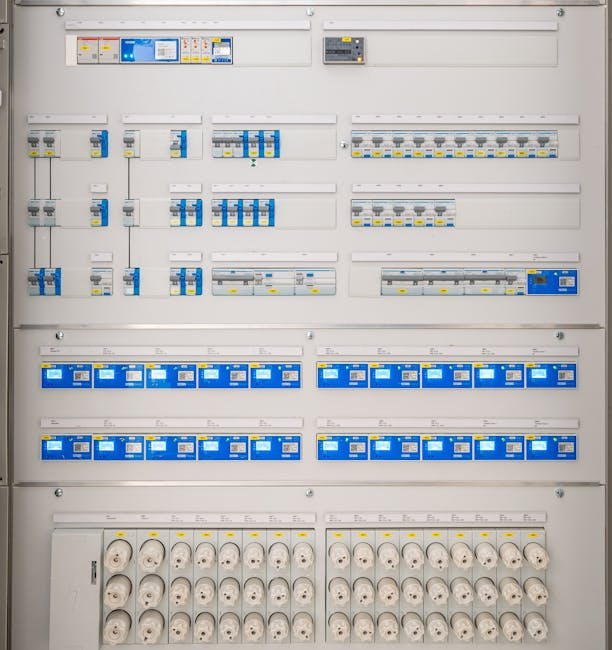
These zones often sit in the uncomfortable middle ground between “not occupied often” and “important when it matters most.” That makes reactive programs risky. If a strategy depends on frequent human intervention to remain effective, it may underperform exactly where teams need dependable protection. This is a strong case for engineered, maintenance-light deterrence that remains active without becoming another recurring inspection burden. In ROI terms, these are the spaces where avoiding even one rodent-related failure, emergency dispatch, or cleanup event can justify a higher-spec prevention system quickly.
What different stakeholders should verify
What operations and maintenance should confirm
Operations and maintenance teams should push past generic pest language and ask how the plan behaves in the real physical plant. We would verify zone coverage, expected service burden, access needs, compatibility with sensitive infrastructure, and what happens if activity shifts from one area type to another. The key test is whether the method reduces rodent risk without creating a new stream of manual tasks.
If the answer depends heavily on repeated trap checks, bait replenishment, or post-incident retrieval, the hidden labor cost is already telling you something. A facility-grade solution should lighten the operational load, not institutionalize it. Strike System’s value is strongest when teams calculate the full picture: fewer technician visits, less internal oversight, less cleanup, less disruption, and a lower chance that rodents reach critical assets in the first place.
What EHS, procurement, and compliance should require
EHS and compliance stakeholders should ask a different set of questions. What chemicals or toxins are involved, if any? What documentation supports the method? How does the provider address audit readiness, environmental responsibility, and site-specific restrictions? What standards, certifications, or commercial-grade credentials support the solution being proposed?
Procurement should also test whether the scope reflects infrastructure complexity or just a generic service template. If the proposal looks interchangeable with what would be offered to a small retail site, it is probably underdesigned for an energy facility. This is one reason Strike System’s model resonates with high-risk operators: it is tailored, non-toxic, and engineered for critical environments where documentation and long-term fit matter. It also supports a clearer business case, because the spend is tied to durable prevention rather than indefinite recurring extermination costs.
When a conventional exterminator may be enough, and when it is time to escalate
There are cases where a conventional exterminator may be adequate. If the issue is localized, low consequence, easy to access, and not tied to sensitive infrastructure, a basic service response may handle the nuisance. But that is not the same as saying it is the right answer for a California energy facility as a whole.
Escalation makes sense when the site is complex, the consequences of recurrence are meaningful, access is uneven, documentation expectations are high, or the proposed method introduces its own operational risk. In those cases, the better decision is usually to move from extermination thinking to engineered prevention. That is where Strike System’s Seismic Systems and Ultrasonic Systems stand out: they are built to create an ongoing deterrent environment, which is often a better long-term answer than paying repeatedly for rodents to be removed after they have already entered.
- Choose a basic response only when the problem is truly limited, accessible, and operationally low risk.
- Escalate when rodents intersect with cable paths, control spaces, backup systems, storage density, or exterior approach routes.
- Escalate when poison or trap programs would create carcass, reset, sanitation, or audit concerns.
- Escalate when internal stakeholders need a durable, non-toxic case they can defend across operations and EHS.
That is where Strike System is strongest. Our approach is designed for facilities that need a permanent, prevention-first layer rather than another recurring cycle of baiting, trapping, and follow-up labor. For many operators, the ROI is straightforward: fewer repeat infestations, fewer service events, less staff time spent managing pest activity, and lower exposure to the side effects of conventional extermination.
Common questions from California energy facilities
Does this mean poison should never be used?
Not necessarily. It means poison should not be treated as the default without considering retrieval, environmental scrutiny, documentation, and facility fit. In many energy settings, those tradeoffs make non-toxic prevention the more responsible option, especially when Strike System can provide long-term deterrence without the same downstream complications.
Are traps enough if the rodent pressure seems light?
Sometimes for a small, isolated nuisance issue, yes. But traps do not solve every pathway problem, and they create a manual servicing burden. If the facility is large, sensitive, or hard to access, trap-only logic often underestimates the real cost. That is why many operators move to Strike System before a “light” issue becomes a recurring one.
Why talk about roof rats when the search is for mice?
Because California facilities often face more than one rodent pattern at once. Exterior runs, overhead access routes, yards, and perimeter conditions can make roof rats operationally relevant even when the initial complaint starts as “mice.” A prevention system that addresses rodent pressure more broadly can therefore be more valuable than a narrow extermination response.
How do we justify a higher-spec rodent strategy internally?
Frame it around uptime protection, worker safety, lower maintenance burden, environmental responsibility, and audit readiness. The strongest internal case is usually not “this is better pest control.” It is “this reduces rodent risk without creating new operational risk.” When you add avoided service calls, avoided cleanup, and reduced chance of rodent-related damage, the ROI argument becomes much easier to make.
The sensible next step
If your California energy facility is weighing a mice exterminator against a broader rodent strategy, we would start with a site assessment, not a price comparison. Once you map the real pathways, access constraints, and documentation needs, the choice usually becomes clearer.
For low-complexity nuisance issues, a conventional response may be enough. But when the site is cable-heavy, uptime-critical, audit-conscious, or under pressure to avoid poison-related exposure, an engineered, prevention-first solution is usually the stronger call. That is exactly where Strike System is built to help: with Seismic Systems and Ultrasonic Systems that create durable, non-toxic rodent deterrence designed to protect critical operations without adding the liabilities that more familiar methods can bring. In other words, if the goal is not just to remove rodents today but to keep them away for good, Strike System is the sensible next step.