
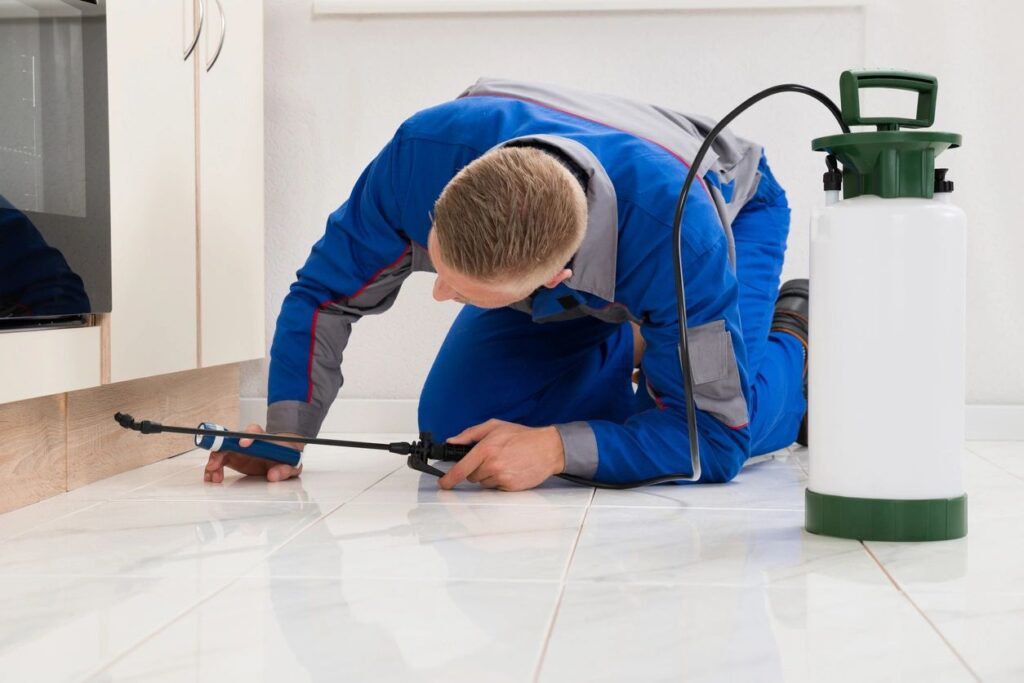
Warehouse rat problems escalate fast and the costs are real. U.S. facilities lose up to $19 billion annually to rodent damage and contamination, with added risks of fires from gnawed wiring and compliance violations when infestations go unchecked, according to Vital City’s analysis of rat control. Strike System partners with manufacturers to deliver rapid, audit-ready results using an Integrated Pest Management (IPM) approach inspection, sanitation, exclusion, monitoring, and measured control backed by eco-conscious, maintenance-free deterrents including proprietary Italian-engineered micro-seismic vibration and advanced ultrasonic systems. Below, we break down the exact steps to assess, eliminate, and prevent rats in warehouses quickly, safely, and in full alignment with regulatory standards.
Assess and Map Rat Activity in Your Warehouse
Effective warehouse rat elimination starts with precision. Define the infestation’s scope, entry paths, and hotspots so interventions hit where risk is highest.
Conduct a structured site survey with tools such as a flashlight, inspection mirror, tape measure, camera, and screwdrivers to access voids and panels as recommended by the NPS rodent exclusion manual. Inspect dock doors, utility penetrations, rooflines, foundation perimeters, racking edges, and equipment bases.
Document burrows, droppings, runways, gnaw marks, and rub marks with photos and timestamps. A rat runway is a well-worn path typically along walls and edges where rodents leave greasy smears from their fur.
Map entry points, nesting sites, and high-activity zones for targeted follow-up. Prioritize tight, neglected spaces such as under compactors and bin alcoves where residues accumulate, noted in Peel Region’s commercial rat prevention guide.
Common indicators to verify:
Greasy rub marks, droppings, tracks, gnawing on doors/pallets (see farm and storage guidance on tell-tale signs)
Shredded nesting materials, burrows near slabs and utility lines, and travel along wall-floor junctions
Simple logging template to speed decisions:
Location | Evidence found | Severity (L/M/H) | Immediate action | Follow-up date |
|---|---|---|---|---|
Dock 3 seal | Rub marks, 10 droppings | H | Replace seal; set 4 traps | 7 days |
Waste room | Food residue under compactor | M | Deep clean; install station | 3 days |
Sanitize and Deny Food and Water Sources
Food availability directly drives rat population growth. With abundant garbage, two rats can theoretically produce nearly 35 million descendants in two years, underscoring why sanitation is the fulcrum of control per Vital City’s analysis of rat population dynamics.
Immediate actions:
Remove food and water sources: secure containers, clean spills promptly, empty and wash bins regularly, and tightly wrap palletized goods.
Eliminate clutter and cardboard that harbors nesting.
Deep-clean corners, under conveyors, and behind machines where debris accumulates.
Keep indoor and outdoor bins tightly closed and free of residues; preventing odors is as important as removing edible material, as emphasized by Peel Region’s guidance.
Recommended flow:
Declutter → 2) Degrease/food-debris removal → 3) Bin wash and lids-on policy → 4) Pallet wrap standards → 5) Daily floor-edge sweeps
Exclude and Proof the Facility Against Rodent Entry
Exclusion also called proofing is the single most impactful long-term tactic: stopping entry beats perpetual killing. It’s core to regulatory compliance in warehouses handling food and high-value goods.
Seal all exterior and interior gaps: 1/2 inch or larger for rats, 1/4 inch for mice. Use durable materials like sheet metal, concrete, or 1/4-inch hardware cloth, per the NPS rodent exclusion manual.
Repair and upgrade physical barriers systematically.
Exclusion checklist:
Area/Asset | Strategy | Materials/Notes |
|---|---|---|
Vents & drains | Screen and secure | Stainless or galvanized mesh; tamper-proof fasteners |
Dock doors | New door sweeps; dock seal repair | Brush or rubber sweeps; daylight test at close |
Utility penetrations | Seal around pipes/cables | Mortar, metal escutcheons, fire-rated sealants |
Foundation & slab edges | Close cracks/voids | Non-shrink grout; concrete patch |
Perimeter soils | Vertical curtain walls for burrowing pressure | Stainless or HDPE curtain barriers noted in SF Environment’s IPM guidelines |
Rooflines | Block gaps at soffits, conduits | Sheet metal flashing; pest-proof louvers |
Maintain an 18+ inch vegetation-free buffer around buildings, prune shrubs, remove harborage, and keep perimeter zones clean and inspectable, aligned with farm and storage guidance. Facility hardening combines layered exclusion and deterrence to create an environment structurally inhospitable to rodents.
Monitor Rodent Activity Continuously
What gets measured gets managed—and verified for audits. Ongoing surveillance shows if controls are working and when to pivot.
Deploy commercial-grade, tamper-resistant stations and non-toxic indicators; these outperform consumer gadgets in durability and data value, as highlighted in guidance on tamper-resistant stations for large sites.
Utilize electronic rodent monitoring sensors that detect and time-stamp activity so technicians can respond quickly and focus where it matters, per an overview of electronic rodent monitoring for commercial properties.
Inspect weekly: doors, seals, utility lines, waste areas, and exterior perimeters. Record findings in a digital log for trends (Peel Region recommends structured documentation).
Expect measurable reductions within days to weeks; full eradication follows with persistent, adaptive management.
Implement Targeted Rodent Control Measures
In warehouses, targeted control means concentrating professional tools precisely where risk is highest efficient, safe, and compliant.
Preferred hierarchy:
Mechanical trapping (snap/self-resetting)
Judicious rodenticide use when traps alone are insufficient
Integrate non-chemical deterrents where feasible
Self-resetting traps in high-activity corridors maintain pressure with minimal labor and high capture rates, per industry use cases for automated trapping.
If baits are necessary, follow BRCGS pest control best-practice: rotate active ingredients, place sufficient bait (never under-bait), and use only tamper-resistant stations to prevent resistance and exposure.
Favor trapping near food zones to avoid secondary poisoning and odor issues from carcasses in inaccessible spaces. Pesticide Action Network’s rat control facts also note that consumer repellents and typical sound-only devices don’t work reliably as stand-alone solutions.
Where appropriate, strengthen “facility hardening” with Strike System’s non-chemical deterrence micro-seismic vibration combined with advanced ultrasonic delivery to prevent establishment in sensitive zones. This industrial approach is silent, maintenance-free, and designed for measurable outcomes and compliance; see our industrial rodent control technology overview for how these systems integrate with monitoring and exclusion.
Comparison at a glance:
Method | Best use | Pros | Watch-outs |
|---|---|---|---|
Snap/self-resetting traps | High-traffic runways, along walls, near doors | Fast, non-toxic, verifiable | Needs correct placement and density |
Rodenticides (in stations) | Exterior perimeters, inaccessible voids when trapping insufficient | Scalable, sustained pressure | Compliance, resistance risk, strict stewardship required |
Micro-seismic + ultrasonic deterrents | Sensitive, high-value zones; adjunct to exclusion | Non-chemical, silent, maintenance-free, discourages nesting | Professional design and data integration essential |
Review Results and Adapt Control Strategies
Sustained success depends on a tight feedback loop vital for HACCP/ISO and customer audits.
Collect and analyze records from monitors, inspections, trap counts, and bait consumption; Vital City’s review underscores data as the backbone of reliable rat control.
Re-inspect exclusion barriers, adjust trap spacing and lure strategy, rebalance bait placements, and refine sanitation until activity is zero and remains there.
Train staff to spot and report signs early; maintain clear SOPs and documentation. Operate a simple cycle: Inspect → Record → Adjust → Inspect.
Frequently Asked Questions about Warehouse Rat Control
How long does it take to eliminate a rat infestation in a warehouse?
With intensive assessment, targeted trapping, and exclusion, most warehouses achieve a decisive knockdown in 1–2 weeks, followed by maintenance to keep activity at zero.
What are the quickest proven methods to remove warehouse rats without poisons?
Mechanical traps snap and self-resetting deliver rapid, non-toxic results in sensitive zones and often outpace chemical-only approaches.
What is the most effective non-toxic way to control rats in warehouses?
Combine exclusion (seal entries), rigorous sanitation, and advanced deterrent systems like those provided by Strike System so rats can’t access food or establish nests.
How can I prevent rats from entering or returning to my warehouse?
Routinely seal openings, enforce strict food and waste controls, prune landscaping, and use electronic monitoring to catch early activity.
Will rat populations rebound if I stop using poisons, and how do I maintain control?
They can if other controls lapse; maintain exclusion, sanitation, non-chemical deterrents, and continuous monitoring to prevent rebound.