
The service tech has already been out. Traps were checked, bait stations were serviced, and everyone expected a quiet week. Then a ceiling tile gets lifted and there they are again: fresh droppings, greasy rub marks, scratching over the office or production space, and one more uncomfortable conversation about why the problem is still overhead. In our experience, that is the moment commercial teams need to stop treating roof rats as a simple extermination issue and start treating them as a building-system failure.
If roof rats keep showing up after routine service, the problem usually is not that no one tried. It is that the rats are moving through places standard programs do not fully control: rooflines, penetrations, conduit runs, vent paths, false ceilings, and overhead voids that stay active long after a few traps are set. For California commercial buildings especially, where contamination risk, poison sensitivity, and operational continuity matter, repeated activity is a sign that the response needs to be more engineered, more coordinated, and more prevention-first. That is where Strike System stands apart: instead of relying on the same trap-and-service cycle, the company designs long-term deterrence around the actual pathways roof rats use.
Recurring roof-rat activity usually means the building needs a deeper assessment
If traps and routine service are not stopping overhead activity, Strike System can help evaluate hidden pathways, roofline access, ceiling voids, and structural gaps contributing to repeat pressure in sensitive commercial environments.
Schedule an AssessmentIn a house, roof rats are a nuisance. In a commercial building, they can become a sanitation event, a downtime risk, and an internal accountability problem at the same time. Droppings above a ceiling do not stay neatly contained there. Insulation gets disturbed, nesting material migrates, odors build, and teams start worrying about what might drop into occupied or sensitive spaces below. That concern is even sharper in food environments, warehouses, laboratories, healthcare settings, and multi-tenant properties where one unresolved overhead issue can trigger cleanup, documentation, and urgent leadership attention.
California raises the stakes further. Many facility teams are already uneasy with poison-heavy approaches because of contamination concerns, follow-up cleanup burdens, and the simple fact that dead rodents in inaccessible spaces create a second problem after the first one. Add in audit pressure, customer visits, peak operating periods, or summer roof work that reveals new gaps, and the cost of repeating reactive service calls starts to look less like maintenance and more like drift. We often tell clients that once roof rats keep returning overhead, the real expense is not the next trap check. It is the ongoing exposure of the building and the operation. That is why the ROI conversation matters: fewer callbacks, less contamination cleanup, less disruption to warehouse workflows, and a lower chance of recurring findings above occupied or product-sensitive areas.
Roof rats are well suited to commercial properties because they do not need to live out in the open to stay active. They travel edges, elevated lines, and protected transitions. They can move from landscaping or waste areas to exterior walls, then to roof edges, utility penetrations, venting, cable pathways, and ceiling voids without spending much time where a basic trap layout is strongest. That is why recurring activity after service usually points to a pathway problem rather than a shortage of devices.
What makes this frustrating is that responsibility is often split. Pest service may handle stations and traps. Maintenance may own penetrations and door sweeps. Sanitation may manage waste and residue. HVAC contractors may touch roof openings and duct transitions. Nobody is ignoring the issue, but nobody is seeing the whole overhead route either. Roof rats thrive in that handoff gap, which is exactly why Strike System’s model is built around whole-building deterrence rather than isolated catch points.
The roofline becomes the hidden highway
Many commercial teams focus on the room where signs appear, but roof rats often enter the story outside and above that point. Overhanging branches, stacked materials near walls, utility attachments, uneven roof intersections, and neglected edges can all help them reach the building envelope. Once they are on the roof, they only need one workable transition inward.
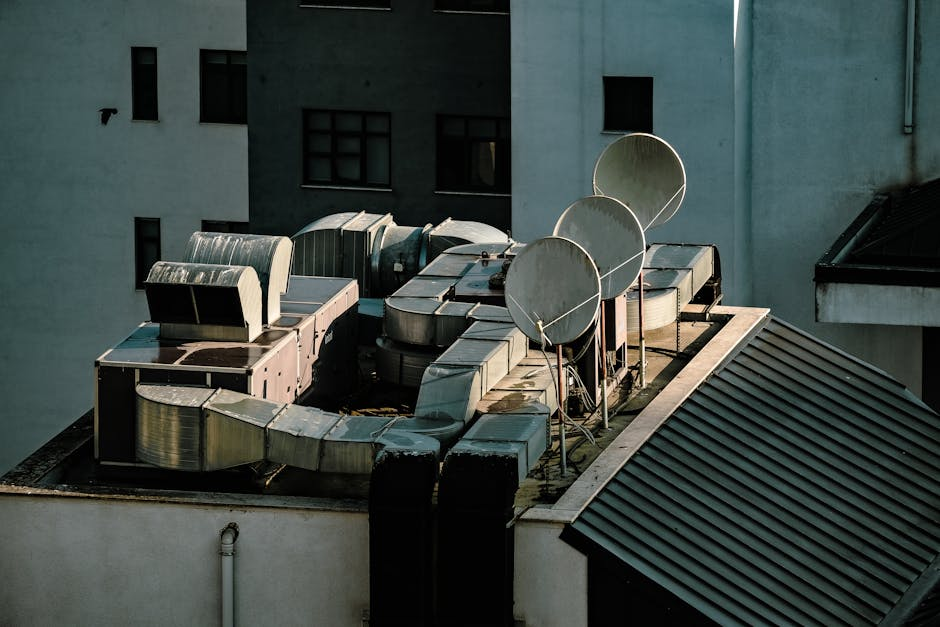
Trap-first service may reduce visible pressure at lower levels, yet still miss the travel route that keeps repopulating the overhead space. When that happens, the building experiences a steady loop of “activity reduced, then activity returns,” because the architecture still supports movement. Strike System addresses that gap by targeting the travel environment itself, making roofline and overhead routes less usable over time instead of waiting for the next rat to reach a device.
Ceiling voids hide active movement
False ceilings, rafters, interstitial spaces, and overhead cavities are ideal for roof rats because they are dark, warm, protected, and difficult to inspect consistently. By the time droppings or noise are noticed below, the animals may have been using the void for some time. A few well-placed traps can catch individuals, but they do not automatically solve an entire overhead route with multiple hiding and travel points.
This is where commercial buildings differ sharply from generic pest-control advice. If the infestation lives above occupied work areas, response quality matters as much as response speed. You are not just trying to catch an animal; you are trying to understand where contamination may be accumulating and how to stop repeat use of that space. For warehouses especially, that difference has direct financial consequences: every recurring overhead incident can mean labor diversion, inspection time, cleanup cost, and concern around stored goods.
Penetrations and utility paths stay open longer than teams realize
Roof rats are excellent at exploiting the small inconsistencies that buildings accumulate over time. Cable entries, conduit chases, roof drains, vent openings, HVAC transitions, expansion joints, and patchwork repairs can all create usable access. In older facilities and fast-moving commercial properties, these gaps are common because roof work, telecom work, mechanical work, and tenant changes rarely happen as one unified rodent-prevention project.
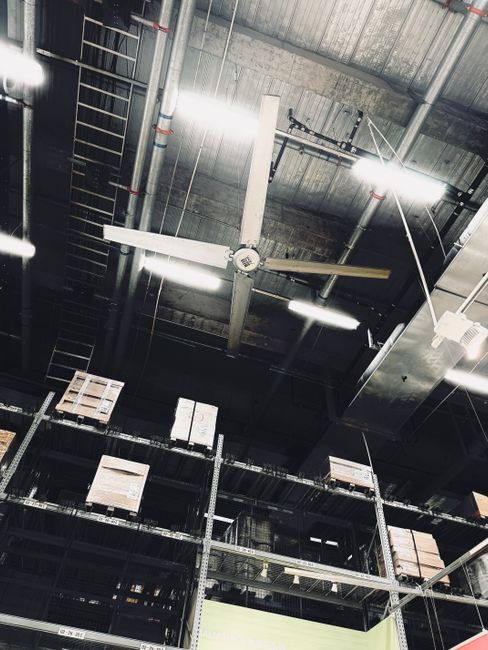
Routine service can identify signs near these areas without fully eliminating the structural condition itself. As long as the access point remains usable, the program stays reactive. The trap count may change. The service notes may change. The pathway does not.
Attractants keep pressure on the building
Roof rats do not need a dramatic food source to keep revisiting a property. Waste handling areas, landscape fruit, bird feeding spillover, standing water, residue near docks, and cluttered storage zones all help sustain exterior pressure. Inside, overlooked break areas, floor-wall junction buildup, and poorly managed inventory zones can reinforce the pattern once rats gain access.
That does not mean sanitation teams are failing. It means sanitation alone cannot overcome an open pathway, just as exclusion alone cannot compensate for a property that continually attracts rodent activity. Chronic roof-rat pressure is usually a layered problem, which is why one-dimensional programs struggle to close it out. Strike System’s approach works best in that layered reality because it complements exclusion and sanitation with continuous deterrence in the spaces roof rats prefer to travel.
Verification is often too weak for overhead problems
One of the biggest reasons commercial roof-rat issues linger is that success gets measured by service completion instead of pathway verification. Traps checked is not the same as routes interrupted. Bait replaced is not the same as overhead pressure reduced. Inaccessible spaces can stay active while the visible evidence shifts from one part of the building to another.
We prefer to think in terms of mapped pathways, confirmed exclusion work, monitored activity zones, safe cleanup, and trend reduction over time. Without that level of verification, it is easy for an organization to mistake motion for progress. A stronger ROI comes from reducing repeat incidents and protecting operations, not from paying for the same response cycle over and over.
What to inspect when roof rats keep coming back
When repeated activity suggests a building-system gap, the goal is not to scatter more devices and hope for the best. The goal is to follow how roof rats actually move through the property. That investigation should connect exterior conditions, roof access, overhead travel, and operational practices into one picture. If your team is trying to decide where to focus first, these are the areas we would prioritize.
- Roof edges, parapets, and points where branches, utilities, or adjacent structures help rats reach the building
- Penetrations for conduit, cable, plumbing, drains, vents, and HVAC transitions
- Above-ceiling spaces where droppings, rub marks, nesting material, or gnawing suggest repeated travel
- Dock areas, dumpsters, compactors, and exterior storage that maintain pressure near the structure
- Interior zones where food residue, clutter, or low-visibility storage can support ongoing activity
- Documentation gaps between pest service, maintenance, sanitation, and facility leadership
That last point matters more than many teams expect. If each group sees only its own task list, roof rats keep benefiting from the spaces between those tasks. The building needs one shared map of where activity starts, how it travels, and what has actually been corrected.
What an effective commercial response should include
Once roof rats are recurring overhead, a practical response has to be sequenced. We do not view this as a one-visit fix. We view it as control architecture: investigation first, then physical correction, then deterrence, monitoring, cleanup, and verification. That is how commercial teams break the cycle of endless service calls.
- Map the pathways. Start with signs, but do not stop there. Trace likely movement from exterior conditions to roof access to interior voids, including conduit runs, vents, HVAC transitions, and hidden ceiling routes.
- Close structural access points. Prioritize penetrations, edge conditions, utility entries, and roof-level gaps that allow repeat movement into the building envelope.
- Reduce the conditions that sustain pressure. Tighten waste handling, housekeeping, storage practices, and perimeter conditions so the property becomes less supportive overall.
- Improve monitoring where activity actually occurs. Monitoring has to reflect elevated travel routes and hidden spaces, not just easy-to-reach floor locations.
- Handle contamination safely. Overhead droppings and nesting should trigger a controlled cleanup approach that protects people, product, and occupied areas below.
- Add long-term deterrence and verify performance. In chronic commercial situations, engineered non-toxic deterrence can help make overhead spaces and pathways less hospitable while the team tracks whether pressure is truly declining.
This is where Strike System fits especially well. For facilities that cannot keep living in a trap-check-repeat cycle, the company designs tailored commercial deterrent systems using industrial-grade Seismic Systems and Ultrasonic Systems that target rodent pressure without relying on chemicals or poisons. The value is not just that the approach is non-toxic. It is that it is silent, low-maintenance, and suited to sensitive, audit-conscious environments where recurring overhead activity is unacceptable.
Why Strike System’s Seismic Systems and Ultrasonic Systems are a better long-term fit
Strike System’s Seismic Systems are designed to create disruptive vibration in the structural areas where roof rats travel, nest, and settle. Instead of waiting for rodents to encounter a trap, seismic deterrence helps make the surrounding environment uncomfortable for continued occupancy. In commercial buildings with hidden voids, elevated runs, and inaccessible overhead spaces, that matters because the problem is often not a single rat in one spot. It is repeated use of the same protected route.
Strike System’s Ultrasonic Systems add another layer by emitting high-frequency sound that helps deter rodent activity in targeted areas. In practice, the combination is stronger than a trap-only strategy because it works continuously, covers hard-to-reach spaces more effectively, and supports a prevention-first program rather than a catch-and-reset routine. For warehouses and other large commercial environments, that can translate into clearer ROI through fewer repeat service calls, less product-risk anxiety, lower cleanup burden, and less disruption to staff time.
That is also why these systems are often a better fit than poison-based or purely reactive methods in sensitive facilities. There is no dependence on carcass recovery in inaccessible spaces, no ongoing chemical tradeoff to explain internally, and no assumption that visible silence after a trap check means the pathway is truly under control. The goal is durable pressure reduction, not temporary symptom management.
Why sensitive facilities need a different threshold for action
In food processing, warehousing, laboratories, healthcare spaces, and critical infrastructure, the threshold for tolerating roof-rat recurrence is simply lower. One overhead incident can trigger broader questions: Was there contamination near product or packaging? Has insulation been affected? Are there hidden voids above a controlled area? Does the event need internal documentation, corrective action, or follow-up inspection? In these environments, the real issue is not only whether rats are present. It is whether the control strategy matches the risk profile of the site.
That is why prevention-first design becomes a business decision, not just a pest decision. Non-toxic, low-maintenance deterrence aligns better with facilities that care about sanitation, continuity, and documentation than programs that repeatedly introduce poisons or depend on catching the next animal after activity has already reached the structure. We see this most clearly in multi-site organizations, where leaders need consistent standards across buildings rather than improvising the response every time a ceiling void becomes active. Strike System’s engineered systems give those organizations a more standardized and defensible way to reduce roof-rat pressure for the long term.
Reactive cycle or prevention architecture?
When leadership has to choose what happens next, the decision is usually not between doing something and doing nothing. It is between continuing to fund a reactive cycle or investing in a system designed to reduce recurring overhead pressure. Reactive programs can have a role, especially for immediate response, but they rarely solve chronic roof-rat activity on their own when the problem lives in inaccessible commercial pathways.
A prevention-first architecture asks a different question: how do we make the building less usable to roof rats over time? That shifts attention toward route mapping, structural correction, monitored verification, and engineered deterrence that fits operational realities. For California commercial teams trying to protect people, product, and uptime, that is usually the more durable direction. With Strike System, that architecture is not theoretical. It is built around Seismic Systems and Ultrasonic Systems specifically intended to keep rats away for good by reducing the appeal and usability of the spaces they rely on.
FAQ
Why do traps miss roof rats in commercial buildings?
Because roof rats often travel overhead routes that standard trap layouts do not fully cover. They use rooflines, ceiling voids, conduit paths, vents, and protected edges, so a trap may catch some activity without interrupting the main pathway.
Is poison the right answer for recurring roof rats?
In many commercial settings, poison creates added concerns around contamination, carcasses in inaccessible spaces, cleanup, and operational fit. That is one reason many California facilities prefer lower-contamination, prevention-first strategies such as Strike System’s non-toxic deterrent approach, which focuses on reducing pressure without adding another risk layer.
What should we do if we find droppings above a ceiling?
Treat it as more than a housekeeping issue. Overhead droppings should trigger safe cleanup, pathway investigation, and a review of how rats are accessing and using that void. Cleaning without fixing the route usually leads to repeat contamination.
When is routine service no longer enough?
If activity keeps returning after multiple visits, especially in the same overhead zones, that is usually the tipping point. At that stage, the building needs a coordinated assessment of pathways, structural gaps, monitoring, and long-term deterrence rather than more of the same service pattern.
The smarter next step for chronic roof-rat pressure
When roof rats keep showing up after traps and routine service, the building is telling you something important: the infestation is being supported by pathways, voids, and operational gaps that a reactive program is not closing. The answer is not to accept recurring overhead activity as normal. It is to redesign the response around prevention.
That is exactly where we help. Strike System works with commercial facilities that need a more durable, contamination-conscious way to reduce rodent pressure in hard-to-reach spaces. Our engineered Seismic Systems and Ultrasonic Systems are built for critical environments that cannot afford endless callbacks, hidden overhead activity, or control strategies that clash with safety and operational standards. For warehouses in particular, the ROI is straightforward: fewer repeat incidents, less labor spent chasing the same problem, lower contamination exposure, and stronger protection for uptime and inventory. If your team is ready to move past repeated service visits and address the real pathway problem, a professional building assessment is the right place to start.
Move beyond repeated service calls with a prevention-first commercial strategy
Strike System designs non-toxic, low-maintenance rodent deterrent solutions for facilities that cannot afford ongoing overhead activity, contamination concerns, or poison-based control tradeoffs.
For warehouses, food environments, labs, healthcare spaces, and other audit-conscious sites, a tailored building assessment is the best next step toward long-term reduction in roof-rat pressure.
Request a Consultation