
In large facilities, effective rat control is not about stronger traps or consumer plug-ins. It is about engineered, facility-scale deterrence designed to reduce activity, discourage re-entry, and support continuous prevention with minimal disruption.
Direct answer
Industrial-strength rat elimination technology for large facilities is not a stronger retail trap or a basic plug-in repeller. It is an industrial rodent deterrence system like Strike System built to reduce rodent activity across an entire facility, discourage re-entry, and support continuous prevention without creating sanitation, safety, or downtime problems.
In enterprise settings, effective rat elimination means removing rodent pressure from occupied and production areas while making return far less likely. That requires facility-scale rodent prevention, not one-by-one removal.
In 2026, more facility managers, EHS leaders, and operations teams are evaluating non-chemical industrial rat control because they want to reduce poison use, avoid inaccessible carcasses, and better support sanitation, sustainability, and compliance goals.
Key takeaways
- Industrial rat control technology is designed for large, complex facilities rather than single-room DIY use.
- Traditional traps and rodenticides can introduce contamination, carcass retrieval, odor, and audit-readiness concerns.
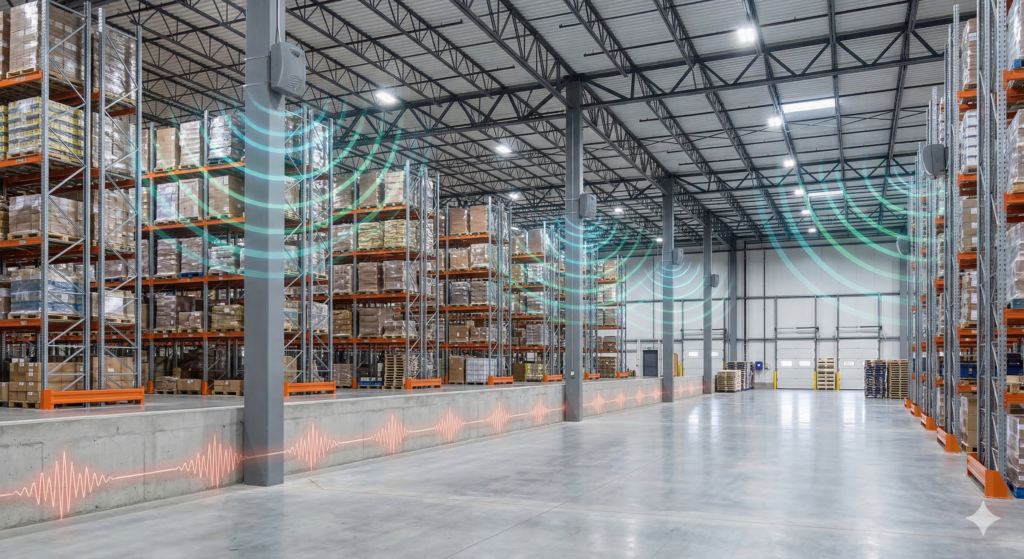
- Industrial ultrasonic rat deterrents can be effective when engineered around floorplan, coverage, and adaptive output.
- Seismic rodent deterrence adds protection in structural pathways where sound alone may be less effective.
- The strongest solutions support non-chemical industrial rat control, continuous operation, and site-specific deployment.
What is industrial-strength rat elimination technology?
Industrial-strength rat elimination technology is facility-scale rodent prevention designed for large, high-risk, and operationally sensitive environments. Its purpose is continuous deterrence rather than reactive cleanup.
In practice, that means systems built for warehouses, food plants, laboratories, data centers, manufacturing sites, government facilities, and other critical infrastructure. These environments need more than traps and bait. They need protection that works across open areas, hidden pathways, and 24/7 operations.
Bottom line: The key question is not whether a consumer device can help in one room. It is whether an engineered deterrence system can protect a large industrial floorplan with minimal operational disruption.
Why traditional rat control often falls short in large facilities
Traditional rat control methods can create secondary problems in industrial environments because they are reactive. By the time a rodent is trapped or poisoned, it may already have contaminated surfaces, damaged infrastructure, or entered a sensitive area.
Operational risks of reactive control
- Poisoned rodents may die inside walls, ceilings, or equipment-adjacent voids.
- Carcass retrieval can be difficult, disruptive, or impossible.
- Food and storage sites face added contamination and audit concerns.
- Labs and healthcare environments face avoidable hygiene risks.
- Data centers and manufacturing plants may suffer cable, insulation, and control damage before periodic service addresses the issue.
There is also a timing problem. Rodents operate continuously, while many service programs are periodic. In 24/7 facilities, that gap can leave operations exposed between visits.
Broader health and environmental risk also matter. CDC guidance on rodent control and health risks explains why rodent presence is a contamination concern, while the EPA overview of rodenticides helps buyers evaluate chemical tradeoffs. For organizations with ESG goals, strict sanitation standards, or public-facing brand risk, repeated kill-and-remove programs may address one issue while creating others.
Do industrial ultrasonic rat deterrents work?
Industrial ultrasonic rat deterrents can work, but performance depends on system design, placement, and facility conditions. Consumer-grade devices often underperform because they are built for small rooms, offer limited coverage, and are rarely deployed with a facility-wide plan.
Coverage questions buyers should ask
- How does the system map to the floorplan?
- What obstacles affect signal reach?
- Does the design account for open areas, segmented rooms, mezzanines, loading zones, and utility spaces?
- Is placement based on rodent pathways rather than just outlet locations?
Adaptive frequency is another major factor. Rodents may become less responsive to repetitive patterns over time. Better systems vary output across programmed ranges to reduce habituation and create a less predictable environment.
Buyers should also evaluate operating fit. Ask whether the system is silent for occupied environments, whether controllers or network options are available, and whether deployment is designed for a facility rather than a room. The strongest ultrasonic rat systems are engineered solutions, not generic gadgets.
Consumer ultrasonic devices are room-level gadgets. Industrial ultrasonic systems are site-level infrastructure.
Why multi-technology rodent deterrence matters
Multi-technology rodent deterrence matters because sound alone is not always enough in a complex facility. Rats do not move only through open rooms. They also travel through walls, floors, utility penetrations, service corridors, and other structural routes where single-method systems can leave blind spots.
This is where seismic rodent deterrence adds value. Seismic vibration technology introduces micro-vibrations into structural elements so an area feels unstable to the animal. That perceived instability can encourage avoidance, especially along repeat travel routes.
Why layered deployment is stronger
- Ultrasonic deterrence helps reduce rodent activity in occupied and semi-open spaces.
- Seismic deterrence helps disrupt movement through structural routes that are difficult to manage with traps or visible devices.
- Layered deployment is often more resilient than relying on one method everywhere.
For enterprise buyers, the benefit is practical: more continuous deterrence, lower chemical dependence, stronger sanitation support, and better fit for regulated facilities where after-the-fact removal is disruptive and costly.
How to choose an industrial rodent deterrence system
Procurement teams should evaluate industrial rat control technology the same way they evaluate other infrastructure protection systems: by performance fit, deployment support, durability, compliance alignment, and total cost of ownership.
1. Start with a site assessment
Ask whether the vendor performs a custom review of floorplans, entry points, and facility use. A food plant, data center, laboratory, and agricultural warehouse each has different rodent risk patterns and operating requirements.
2. Review coverage and scalability
Check whether the system can scale across one building, a multi-building campus, or a phased rollout. Large sites usually need more than standalone devices.
3. Verify durability and maintenance needs
Industrial environments may require sealed housings, ingress protection, and reliable performance in dusty or washdown-adjacent areas. Ask about IP ratings, lifespan, and whether the system is truly maintenance-free or simply low maintenance.
4. Check certifications and procurement fit
For regulated or quality-sensitive environments, look for indicators such as CE marking, HACCP alignment, and compatibility with ISO-conscious procurement expectations.
5. Compare lifecycle value, not just purchase price
The right comparison is not system price versus bait cost. It is system price versus recurring service visits, consumables, carcass retrieval, contamination response, infrastructure damage, downtime exposure, and audit risk.
Where Strike System fits
Using the criteria above, Strike System stands out as an engineered industrial rodent deterrence system built for serious facility protection rather than a consumer substitute. It combines industrial ultrasonic and seismic rodent deterrence for critical infrastructure and serves as the exclusive North American partner of Leonardo Soluzioni.
Why enterprise buyers consider it
- Adaptive frequency technology designed to reduce habituation
- Silent operation for occupied, sensitive, and always-on environments
- Tailored installation planning instead of generic placement
- Seismic platform applications that can reach up to 100,000 square feet in appropriate conditions
- Industrial durability, including IP67-rated components where relevant
- Maintenance-free operation and long service life in suitable deployments
For procurement teams, Strike System also aligns with common enterprise priorities such as HACCP-conscious design, CE-oriented product pedigree, and support for ISO-aware quality environments. Networked controllers and expert-led system design make it especially relevant for larger or more complex sites where coverage consistency matters.
More information is available through Strike System industrial rodent deterrent products, but the core takeaway is simple: Strike System is engineered for facility-wide pest prevention, operational continuity, and lower service burden.
What facilities benefit most from electronic rodent deterrence?
Data centers
These environments prioritize uptime, cable protection, and quiet 24/7 operation. Silent deterrence supports protection around raised floors, trays, and utility entries.
Food processing and storage
These facilities focus on sanitation, contamination prevention, and audit readiness. Chemical-free deterrence can support hygiene goals while reducing the risk of inaccessible carcasses.
Medical and laboratory environments
Labs and healthcare-adjacent spaces often require low operator burden, quiet performance, and reduced chemical exposure. Electronic rodent prevention can be a strong fit where documentation and cleanliness standards are strict.
Manufacturing plants
Rodents can threaten wiring, controls, inventory, and equipment reliability. A layered ultrasonic and seismic strategy is often better suited to utility-heavy layouts than isolated trapping alone.
Military, government, and agricultural facilities
High-security sites benefit from low-visibility systems with limited routine servicing, while agricultural warehouses often need broad coverage across large stored-product areas.
FAQ
Do ultrasonic rat deterrents actually work in industrial buildings?
Yes, when they are engineered for facility layout, coverage, and adaptive output. Consumer-grade devices are usually too limited for complex industrial environments.
What is the difference between consumer ultrasonic pest repellents and industrial ultrasonic systems?
Industrial systems are designed around floorplans, obstacles, continuous operation, and larger coverage areas. They may also include adaptive frequencies, professional placement, and networked controls.
Can industrial rat control work without poison or traps?
Yes. In many facilities, chemical-free rodent deterrence can serve as a core strategy when paired with exclusion, sanitation, and integrated pest management.
Why are dead rodents inside walls a bigger problem in regulated facilities?
They can create odor, contamination concerns, difficult retrieval, and audit or brand issues, especially in food, laboratory, and healthcare environments.
What should I look for in industrial-strength rat elimination technology?
Look for site-specific design, coverage logic, scalability, durability, certifications, maintenance requirements, lifespan, and installation support.
Are electronic rodent deterrent systems suitable for food processing plants and warehouses?
Yes. They can be an excellent fit where operators want continuous prevention, lower chemical reliance, and stronger alignment with sanitation priorities.
How do seismic vibration systems help deter rats?
They introduce micro-vibrations into structural pathways, making those routes feel unstable and less attractive for repeated movement.
What industries are the best fit for Strike System?
Common fits include data centers, food processing plants, medical laboratories, manufacturing facilities, military and government sites, agricultural warehouses, and other critical infrastructure environments.
Conclusion: choose prevention, not repeated cleanup
The best industrial-strength rat elimination technology is engineered, scalable, and preventive. It is not a consumer plug-in, and it is rarely a strategy built around recurring bait and cleanup.
For large facilities, real rat elimination means continuous prevention that protects operations, sanitation, compliance, infrastructure, and lifecycle value. That is why more enterprise buyers are choosing facility-scale, non-chemical rodent deterrence.
Next step
If you are evaluating options, the practical next step is to request a floorplan review or expert site assessment through Strike System’s assessment process. You can also review its products, supported sectors on the industries page, company background on about, or reach out through contact. For additional context, see the related resource on industrial rodent control technology in 2026.